
REVIEW · JAPAN
Okinawa: Afternoon Cycling Tour with Local Guide
Slow roads, big views, local stories. This 210-minute bike tour links Naha’s pottery quarter, old residential lanes, Shuri’s sacred sites, and a hilltop view that regular sightseeing buses cannot reach. I especially like the electric-assisted bicycles and the small groups of no more than five people. They make the uphill ride to Shuri far less daunting, while the guide can give each rider careful help.
The tour also gives you a look at ordinary Naha, not just its headline sights. You pass old houses, narrow lanes, workshops, and a former entertainment district before returning near Kokusai Street. The main concern is simple: you need to be comfortable riding on city roads, and the tour may change if the chance of rain exceeds 70 percent or severe weather is expected.
Key points to know before booking
- Tsuboya’s pottery lanes: Ride through the historic district where Okinawan pottery has been made for about 300 years.
- Electric assistance for Shuri: The motor helps with the climb toward the former Ryukyu capital.
- Small group size: A maximum of five participants allows for patient instruction and plenty of questions.
- A local view of Naha: The route uses narrow roads, traditional houses, Shuri streets, and areas beyond the standard sightseeing circuit.
- Afternoon into evening: The hilltop stop offers city views, while Asato Shotengai becomes a useful place for dinner afterward.
- English and Japanese guidance: An intercom system helps you hear the guide while riding.
Starting beside Makishi Station
The tour begins at the e-charity shop next to Makishi Post Office, about a one-minute walk from Makishi Monorail Station. That is a very convenient start, especially if you are staying around Kokusai Street or arriving by monorail.
You collect your bicycle, helmet, and intercom, then receive a short safety briefing. This matters more than it may sound. The route uses city streets and small roads, so you need to understand how to ride in a group and follow the guide’s instructions.
The bikes have electric assistance. You still pedal, but the motor takes much of the strain out of inclines. That is especially helpful on the way to Shuri, where the route climbs above the flatter central parts of Naha.
You should arrive in comfortable shoes or sports shoes. Bring a light layer, too. The tour begins in the afternoon and can finish as the temperature drops. Phone holders and camera mounts are not included, so you will need to keep your phone or camera in a pocket or bag.
More Guided Rides in Japan:
- Tokyo Guided Small-Group Biking Tour
★ 5.0 · 1,250 reviews - Tokyo Top Highlights 3h Guided E-bike Tour
★ 5.0 · 714 reviews - 3h Tokyo E-Bike Tour: Hidden Gems, and Local Life with guide
★ 5.0 · 670 reviews
Tsuboya pottery and Naha’s quieter lanes
One of the most appealing parts of the route is Tsuboya, Naha’s traditional pottery quarter. In Okinawan, yachimun means pottery. About 300 years ago, the Ryukyu Kingdom brought pottery kilns from scattered parts of the islands into this area, helping Tsuboya become a center for ceramic work.
You do not simply pass the district on a main road. The bicycles let you enter smaller lanes with an older, more settled feel. The pace is useful here. You can look at the workshop streets, notice the low buildings, and hear the guide explain how pottery shaped the neighborhood.
I like this stop because it gives cultural context without turning the tour into a museum visit. You see the area as part of the living city. The trade is not presented as a distant relic, but as something connected to Okinawa’s daily life and local identity.
The lanes are also one reason to choose a bicycle instead of a bus. A larger vehicle would have to stay on wider roads, while a small group on bikes can reach quieter corners. That does not mean every road is empty or perfectly flat. You still need to stay alert and ride at a comfortable pace.
Through traditional houses and everyday Naha
After Tsuboya, the tour continues through local parts of Naha where a few traditional houses remain. This section helps balance the grander Shuri sights later in the afternoon.
You may notice how quickly the city changes. Commercial streets give way to modest residential roads, older homes, and small passages that are easy to miss when you are walking along the main tourist routes. The guide explains more about local life and what it is like to live in Okinawa, rather than focusing only on royal history.
This is also where the small group format earns its keep. Guides such as Aki have been praised for giving clear road instructions and taking time with families who are new to city cycling. Other guides, including Jojo, Tony, Reiji, and Yuri, have been singled out for making the history easy to follow and adjusting their pace to the riders.
The tour is not designed as a hard athletic ride. Still, you will be riding for several hours, and there are city streets to manage. If you have not cycled in traffic before, tell the guide early. The electric motor helps with hills, but it does not steer the bike or remove the need to watch the road.
Climbing toward Shuri Castle town
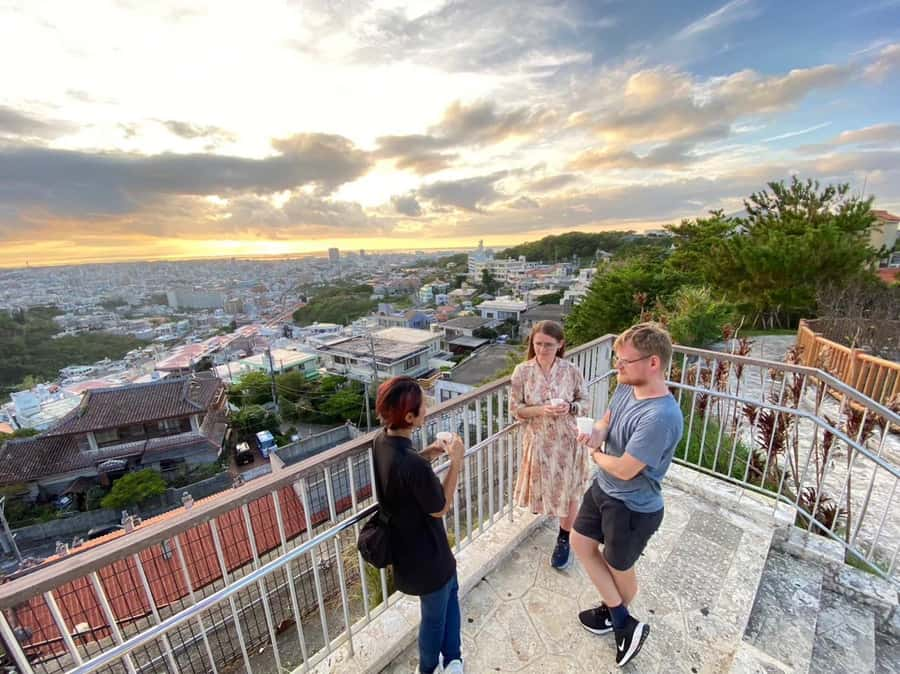
The route then heads toward Shuri, once the capital of the Ryukyu Kingdom. This is where Okinawa’s past becomes more visible in the streets themselves.
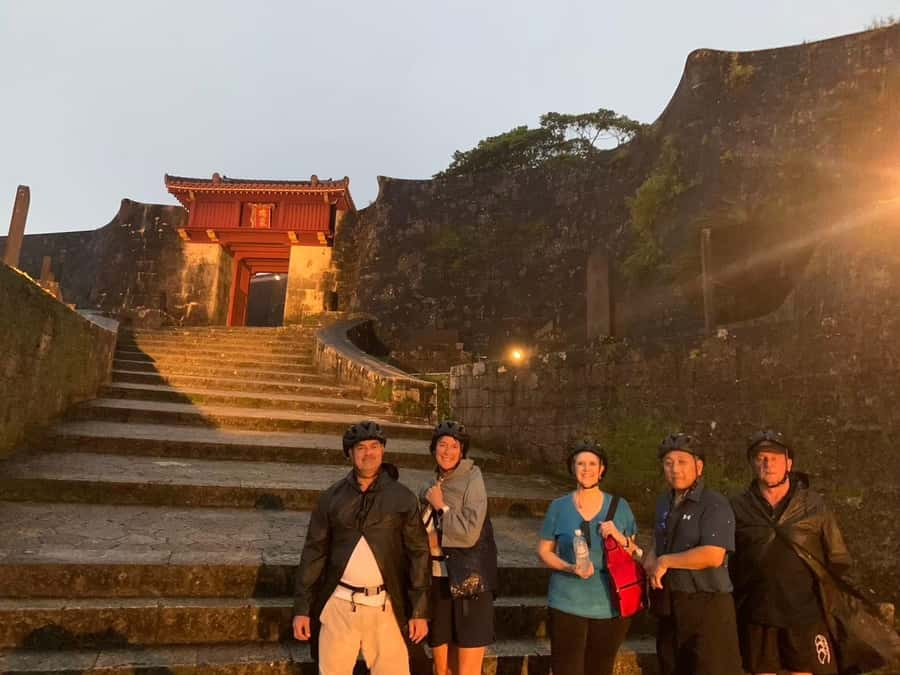
Shuri’s character comes from its stone-paved roads, temples, sacred sites, and old castle-town setting. The ride gives you a sense of how the royal center was arranged, while the guide adds the historical and religious background that can be easy to miss if you visit only the main castle grounds.
The electric bicycles are particularly useful here. Several people have found the uphill section manageable because of the motor assistance, including families with children around age 10. That does not make the route effortless, but it changes the climb from a major obstacle into a reasonable part of the afternoon.
A guide may use printed pictures while explaining the history. That small detail can help you picture earlier buildings and events when the modern streets do not fully show what once stood there. You may also hear about local festivals and current traditions, which connects the old kingdom to Okinawa today.
One limitation is that this is a cycling tour, not a full Shurijo Castle admission experience. The itinerary includes a photo stop near Shurijo Castle and a ride through the castle town, but the value comes from seeing the wider area and hearing the guide, not from spending hours inside the castle complex.
A few more days on two wheels around Japan worth a look
- Hidden Kyoto E-Biking tour
★ 5.0 · 1,843 reviews - Bike Tour Exploring North Kyoto plus Lunch
★ 5.0 · 1,087 reviews - Tokyo Great Cycling Tour
★ 5.0 · 811 reviews - Arashiyama Bamboo Forest & Hidden Gems Bike Tour (Early Bird)
★ 5.0 · 613 reviews
The hilltop viewpoint over Naha
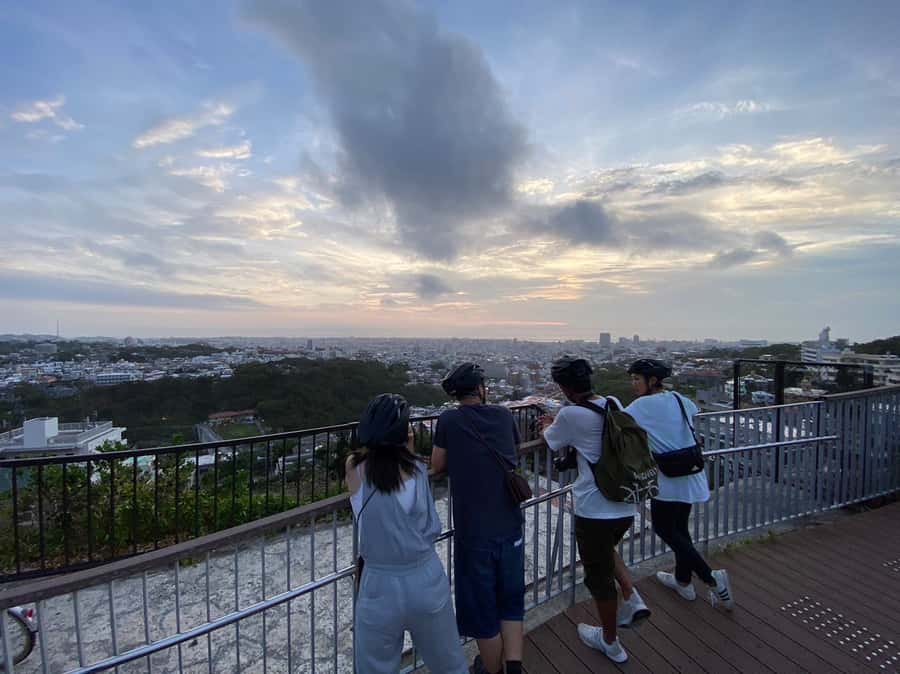
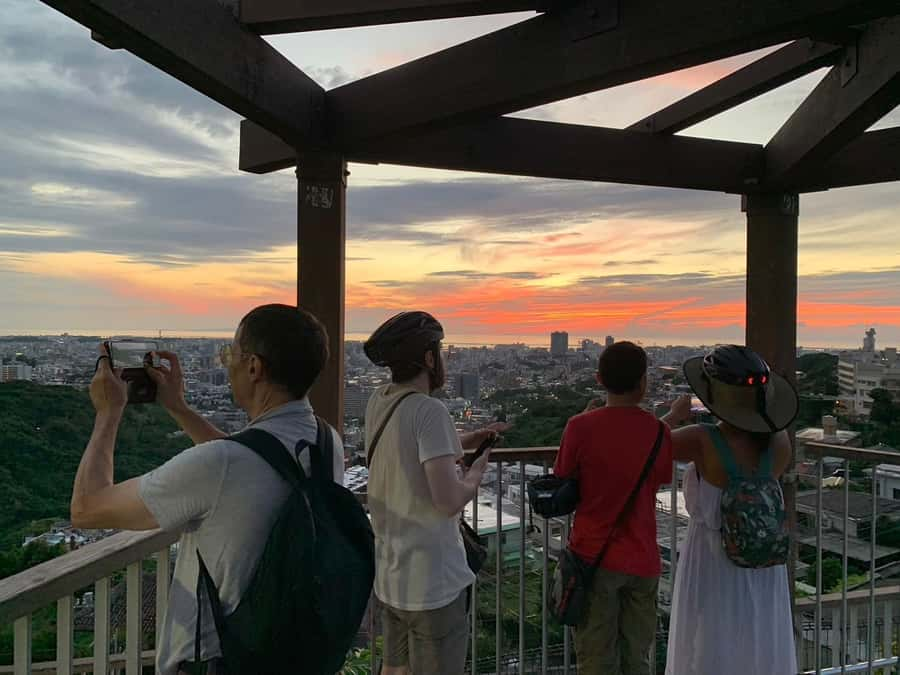
The viewpoint is the tour’s natural pause. After the climb, you stop to look across Naha and take photographs. The timing is well chosen because the afternoon light can soften as the tour moves toward evening.
The view gives you a useful sense of the city’s shape. From above, Naha is easier to understand as a connected place rather than a collection of separate attractions. You can also take a proper break, which helps after riding through the uphill streets.
This stop is one of the strongest reasons to book the tour instead of simply renting a bicycle. A rental shop can give you wheels, but it does not necessarily give you the best local route or a well-timed overlook.
The exact light and weather will vary. The tour may be adjusted if conditions are poor, and the operator says you will be contacted the day before if severe weather or a precipitation chance above 70 percent affects the plan. For the best chance of clear views, keep your schedule flexible.
Shuri Castle Park, stone walls, and sacred places

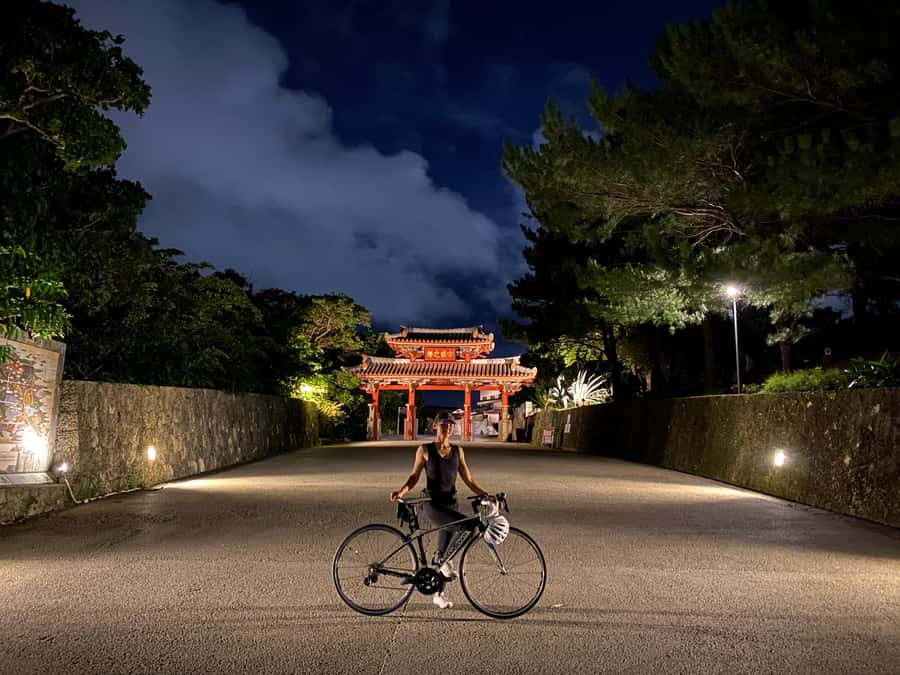
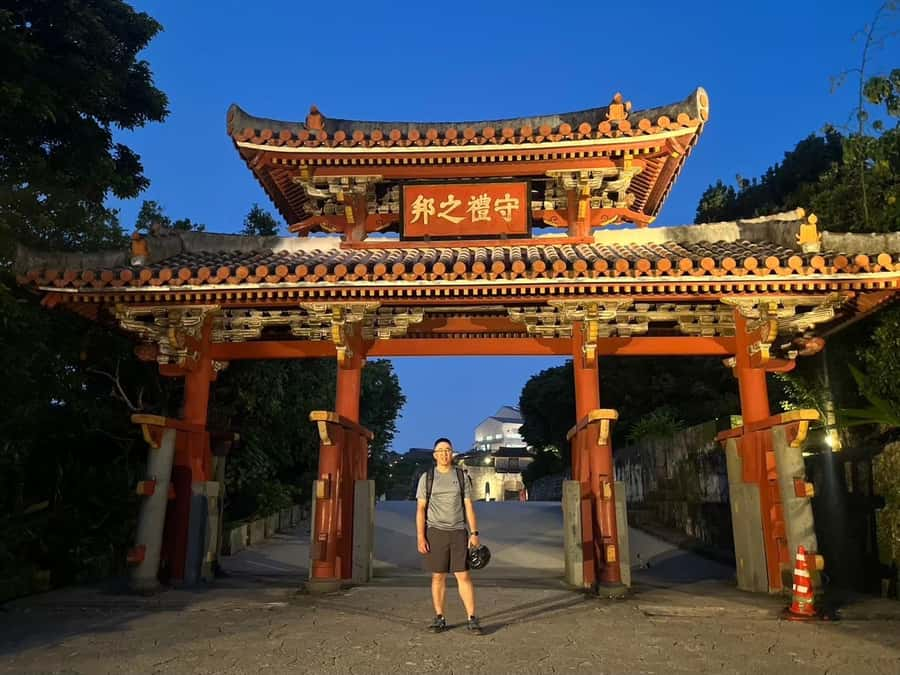
The route passes through Shuri Castle Park, where seasonal plants, stone walls, and the Shureimon Gate create some of the most photogenic scenery of the afternoon.
The park works well by bicycle because you can move through it without spending the whole visit on foot. The guide can point out the importance of the stonework, shrines, and religious sites around the former capital. Okinawan beliefs are not simply a footnote here. Sacred places and royal spaces often sit close together, and the route gives you a chance to see how those traditions shaped Shuri.
Shureimon Gate is especially striking when its stone and timber details catch the later light. It is an obvious photo stop, but it does not feel like a quick checklist item when it follows the quieter lanes and hilltop view.
The park is not an isolated historical zone. You are moving through a part of Naha where people still live, work, and pass through. That mixture of daily life and royal history is one of the tour’s better features.
Asato Shotengai and the evening food option
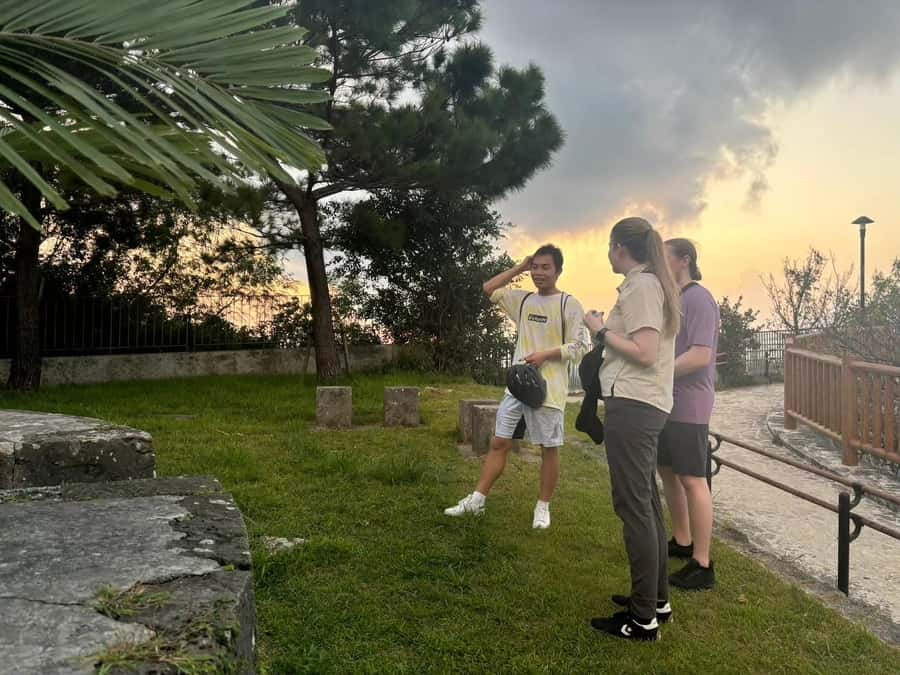
Near the end, the bicycles pass close to Asato Shotengai. This area was once associated with Naha’s red-light district. Today, it becomes livelier in the evening with izakayas and other places to eat and drink.
The tour does not include dinner, which is actually useful. You finish near the city center and can decide for yourself if you want a meal, a drink, or a return to your hotel. Ask the guide for suggestions if you want to stay nearby after handing back the bike.
This final section adds a different kind of local context. Tsuboya shows craft traditions, Shuri shows royal and religious history, and Asato shows how an urban neighborhood changes over time. The route covers more than a set of scenic stops.
What the $87 price gets you

At $87 per person, this is not the cheapest way to move around Naha. You could walk through several central districts for less, and a regular bicycle rental would cost less if you already know the city.
The value comes from the combination of guide, electric bicycle, helmet, intercom, route planning, and a group limited to five people. You are paying for access to smaller roads, a manageable ride to Shuri, and explanations that connect the places together.
I think the price is most reasonable if you want more than transport. Guides have been praised for clear English, patience with inexperienced riders, and personal explanations of Okinawan history. English and Japanese are available, and the intercom makes it easier to hear while moving.
For a family or a couple, the small group can also feel more useful than a large bus tour. Children aged one to five may ride in a child seat attached to a parent’s bicycle, but you should discuss that arrangement with the staff before booking.
Who should book this ride?
I would choose this tour if you want to see Naha from several angles in one afternoon. It suits people who enjoy history but do not want to spend the entire day indoors, as well as visitors who prefer side streets to a fixed sightseeing route.
It is also a good option for families with older children who can ride safely on city roads. The electric assistance helps, and the guides have shown patience with new city cyclists. The three-and-a-half-hour length gives you a full outing without taking the entire day.
You should think twice if you cannot ride a bicycle, dislike urban cycling, or need wheelchair access. The tour is also less appealing if you want a long, detailed visit inside Shurijo Castle itself. Its focus is the wider city, the route between sights, and the stories that connect them.
Free cancellation is available up to 24 hours before departure, and you can reserve now and pay later. Those policies help if your Okinawa schedule depends on weather or changing plans, but you should still bring suitable shoes and a warm layer.
Final verdict: a strong choice for active sightseeing
I would book this tour for a first or second visit to Naha when I wanted a more personal look at the city. The best parts are the pottery lanes, the quieter residential roads, the electric-assisted climb, and the hilltop view over Naha.
The experience is not perfect for everyone. You must ride a bicycle, share city roads, and accept that weather may alter the plan. But for riders who are comfortable with that, $87 buys far more than a bike rental. You get a carefully chosen route, local context, and a small group that lets the guide respond to your pace.
Book it if you want to connect Tsuboya, Shuri, the castle park, and evening Naha in one outing. Skip it if you prefer a fully pedestrian tour or need extensive time inside the castle grounds.
FAQ
Where does the cycling tour start?
It starts at the e-charity Naha Kokusai-dori main shop next to Makishi Post Office. The shop is about a one-minute walk from Makishi Monorail Station.
How long does the tour last?
The scheduled duration is 210 minutes. The operator says the tour may run for about three to three and a half hours.
What is included in the price?
The price includes the bicycle tour, a local guide, helmet, electric-assisted bicycle, and an intercom system so you can hear the guide while riding.
Is the tour available in English?
Yes. The tour is offered in English and Japanese.
How many people are in the group?
The tour is limited to five participants, making it a small-group experience.
Do I need to be an experienced cyclist?
You do not need to be an expert, but you must be able to ride a bicycle. The tour uses city roads, and you should be comfortable following safety instructions and riding with the group.
Can young children join?
Children aged one to five may use a child seat attached to a parent’s bicycle. You should consult the staff about this arrangement before the tour.
What should I bring?
Wear comfortable shoes or sports shoes. Bring warm clothing in case it becomes cooler in the evening.
What happens if it rains?
If the precipitation probability is above 70 percent or severe weather is expected, the operator may change the plan. You will be contacted the day before if this affects your tour.
Can I cancel for a full refund?
You can cancel up to 24 hours in advance for a full refund. You can also reserve and pay later, which keeps your plans flexible.
Just added around Japan
- Private E-MTB guided cycling around Mt. Aso volcano & grasslands★ 5.0 · 16 reviews
- Handmade Goshuin Book Experience Eco Friendly Upcycling in Tokyo★ 5.0 · 21 reviews
- Tokyo: West-Side Cycling and Food Tour with Guide★ 5.0 · 37 reviews
- Tokyo: Discover Traditional Tokyo Full-Day Bicycle Tour★ 4.7 · 131 reviews
- Tokyo: Rice Ball Making Class★ 5.0 · 14 reviews
- Tokyo: 3h Private E-bike Tours, Starting at Your Hotel★ 5.0 · 36 reviews
- Tokyo Bike Tour: Shibuya, Harajuku & Hidden Gems★ 5.0 · 20 reviews
- Tokyo: Private Cycling Tour with cute E-bike★ 5.0 · 11 reviews
Japan Cycling Tours, compared.

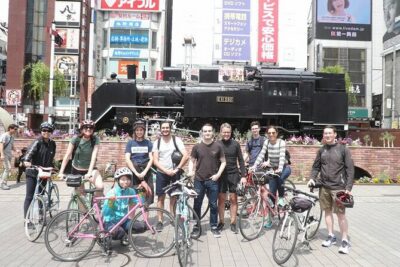


3h Tokyo E-Bike Tour: Hidden Gems, and Local Life with guide
Read our review →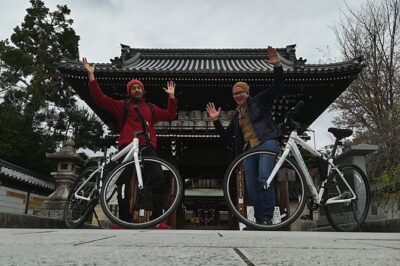
Arashiyama Bamboo Forest & Hidden Gems Bike Tour (Early Bird)
Read our review →
Hiroshima in a Nutshell: Morning Bike Adventure
Read our review →Browse the lists this tour appears in