
REVIEW · OSAKA
Osaka E-Bike Tour With A Local Guide
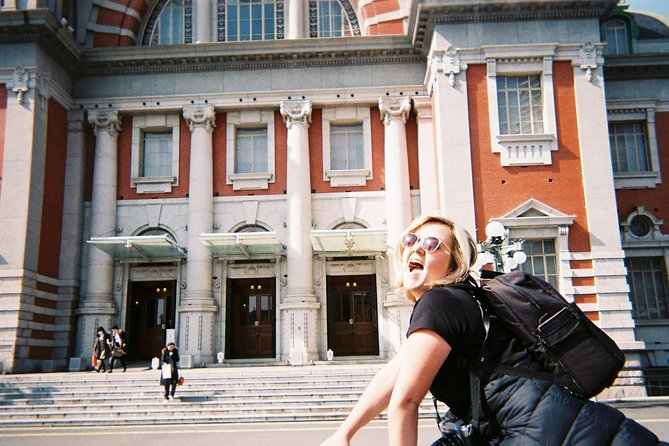
Osaka opens up on two wheels. This three-hour ride links anime shops, ancient temples, castle grounds, riverside gardens, fashion streets, and a giant lion-headed shrine, giving you a useful first look at the city without wearing out your feet. I especially like the pedal-assist electric bikes and the way guides such as Ko and Kosuke add local stories to each stop. The main consideration is pace: you cover a lot in three hours, so several sights are photo and explanation stops rather than long visits.
The small-group limit of seven makes the ride feel personal, and the English-speaking guides have earned strong praise for safety, humor, and clear explanations. I also like that the route crosses very different parts of Osaka instead of circling one tourist district. Still, this is not a good fit if you cannot ride a bicycle, have limited fitness, back or heart problems, or dislike riding in city traffic.
Key points at a glance
- Six very different Osaka stops: Den Den Town, Shitennoji Temple, Osaka Castle Park, Nakanoshima Park, America Town, and Namba Yasaka Shrine.
- Electric assistance helps with slopes: The pedal-assist bikes make the route manageable, even for riders who are not confident cyclists.
- Ko is a frequently praised guide: He is known for good English, humor, local stories, and careful attention to the group.
- A small group keeps the ride personal: With no more than seven participants, it is easier to ask questions and keep together.
- Three hours gives you a city sampler: You see more districts than you likely could on foot, but you will not explore each sight in depth.
- Age and fitness rules matter: The tour excludes children under 14, people under 140 centimeters, people over 70, and several travelers with health or mobility concerns.
Why an Osaka e-bike tour works so well
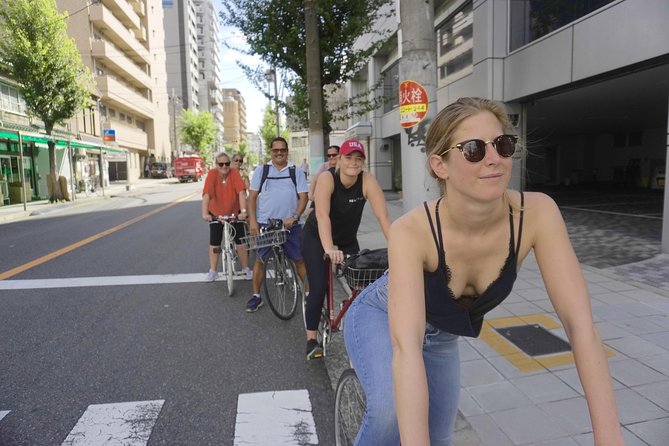
Osaka is spread across a series of neighborhoods with very different personalities. A temple, castle, shopping district, public park, and shrine can all feel far apart when you walk between them. On an electric bike, you can connect these places in one outing and spend more of your time looking around instead of studying train maps.
The pedal assist is the practical star here. You still pedal, but the motor helps take the sting out of slopes and longer stretches. One rider specifically noted that hills required almost no effort, while another person who was not a confident cyclist found the pace manageable. That makes this a good introduction to cycling in Osaka, though it does not turn the ride into a passive sightseeing bus.
The route also gives you a quick lesson in Osaka’s character. You move from pop culture to Buddhism, from feudal power to civic gardens, from youth fashion to Shinto practice. I like that mix. It shows Osaka as a living city rather than a checklist of famous monuments.
More E-Bike Tours in Japan
- Hidden Kyoto E-Biking tour
★ 5.0 · 1,843 reviews - Tokyo Top Highlights 3h Guided E-bike Tour
★ 5.0 · 714 reviews - 3h Tokyo E-Bike Tour: Hidden Gems, and Local Life with guide
★ 5.0 · 670 reviews
Starting at Den Den Town, Osaka’s anime quarter
The tour begins with Den Den Town, the center of Osaka’s anime culture. Its colorful stores and unusual memorabilia give you an early taste of the city’s playful side. If you enjoy anime, manga, games, or Japanese pop culture, this is likely to be one of the most memorable opening stops.
Even if you are not a devoted fan, Den Den Town helps explain Osaka’s modern identity. The shops are a sharp contrast to the temple and shrine stops later in the morning. You get a sense of how old customs and new entertainment share the same city.
The limitation is time. You should expect an introduction to the district rather than a serious shopping expedition. If you want to browse every store or hunt for a particular collectible, return on your own later.
The meeting point is outside a Lawson convenience store. Check your exact meeting instructions carefully, since a large city can have more than one branch with the same name. Arrive ready to ride, rather than planning to buy breakfast or shop before the group sets off.
Shitennoji Temple and Osaka’s Buddhist roots
From Den Den Town, the route continues to Shitennoji Temple, one of Japan’s oldest temples. The stop adds an important layer to the tour because it moves beyond sightseeing and explains how Buddhism shaped Japanese religious life and the surrounding community.
The temple’s architecture and quiet setting offer a welcome change after the colorful commercial streets. You can expect time to look around, take photographs, and hear about the role of Japanese Buddhism. The peaceful surroundings also give the group a natural pause before more city riding.
This is a place where the guide matters. A quick glance at a temple does not tell you much about its role in Osaka. Guides such as Ko have been praised for supplying just the right amount of historical information, with personal stories and local context rather than a long lecture.
Do not expect a full temple tour in three hours. The value comes from seeing Shitennoji as part of a wider story, not from examining every building or ritual detail.
Riding through Osaka Castle Park

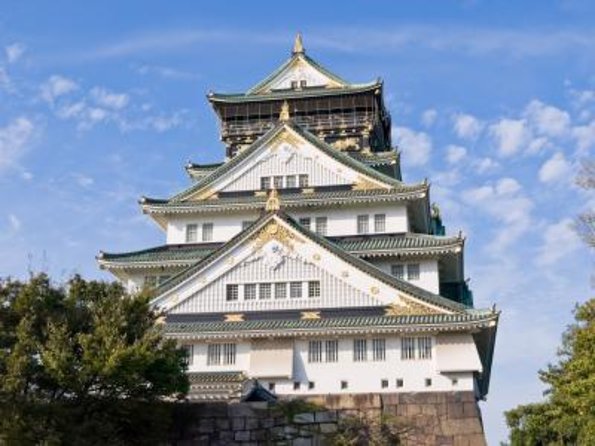
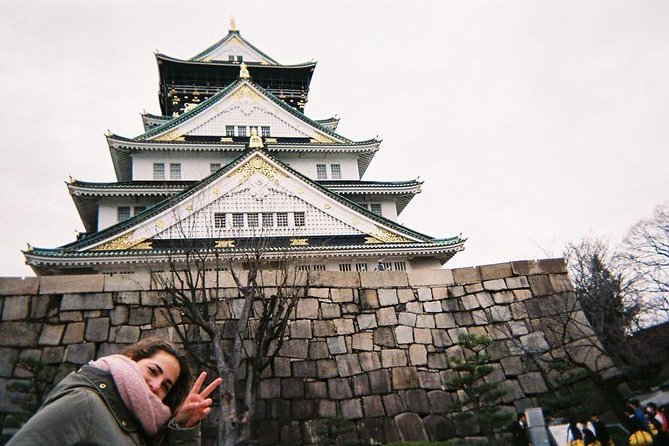
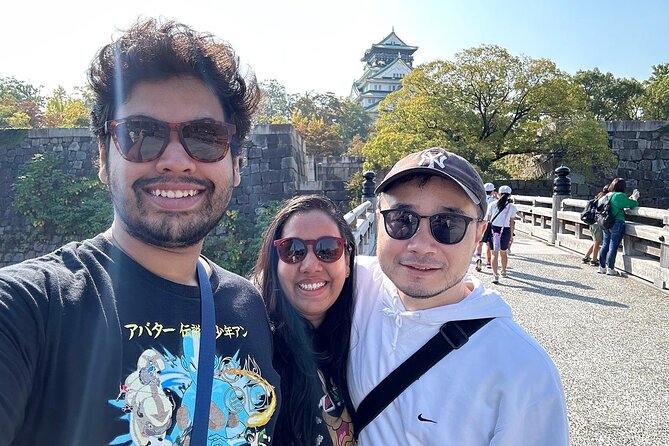
Osaka Castle Park is likely to be the visual centerpiece of the ride. You pedal through green parkland and stop to hear about Osaka Castle, its dramatic past, and the local legends tied to it. The open setting gives you room to enjoy the scenery and take photographs.
Several details make this stop useful for first-time visitors. One guide showed riders a particularly good photo location, and another group enjoyed riding beneath cherry trees near the castle during blossom season. Those seasonal details cannot be guaranteed, but the park gives you a better setting for photographs than a quick roadside stop.
The castle stop is also a reminder that the tour is designed for coverage. You may see the castle and learn about its role without entering every interior exhibit. One rider appreciated seeing nearly all the major Osaka highlights in three hours, while also noting that the skyscraper observation platform was not part of the route. Keep your expectations in line with that design.
For many people, Osaka Castle Park will be the point where the e-bike feels most useful. The park lets you cover more ground than a walking visit, and the electric assistance helps keep the group together without turning the ride into a race.
Same roads, a different day in the saddle:
- Tokyo Guided Small-Group Biking Tour
★ 5.0 · 1,250 reviews - Bike Tour Exploring North Kyoto plus Lunch
★ 5.0 · 1,087 reviews - Tokyo Great Cycling Tour
★ 5.0 · 811 reviews - Arashiyama Bamboo Forest & Hidden Gems Bike Tour (Early Bird)
★ 5.0 · 613 reviews
Nakanoshima Park between Osaka’s rivers
Nakanoshima Park brings a different mood. It is Osaka’s first public park, set in the city’s business district, with gardens and riverside paths. After the temple and castle, this is a chance to slow down and see how residents use public space in the middle of the city.
The contrast is part of the appeal. You are not only moving between famous attractions. You are also seeing the relationship between offices, water, gardens, and daily city life. A short stroll here can make the route feel less like a string of monuments.
You should not expect a long park visit. The stop is best understood as a scenic breather and a chance to hear how the city developed around its waterways. If you prefer a tour focused only on major buildings, this pause may feel less exciting. I find it useful because it gives the itinerary some balance.
America Town and Osaka’s youthful style
America Town, often called Amemura, shifts the focus to fashion and youth culture. The area is known for trendy clothing, unusual shops, and a distinctly Osaka take on street style. It is a lively counterpoint to Shitennoji and Osaka Castle.
This stop works well for people who want more than traditional Japan. You can look at current local fashion, browse funky stores, and see how Osaka’s younger culture expresses itself. The guide can also help you understand the neighborhood as part of the city rather than treating it as a generic shopping area.
As with Den Den Town, shopping time is limited. The route introduces the district, but you may want to return later if you find a store worth exploring. That is one reason I like taking this tour early in an Osaka visit: it helps you mark places for a second look.
Finishing at Namba Yasaka Shrine
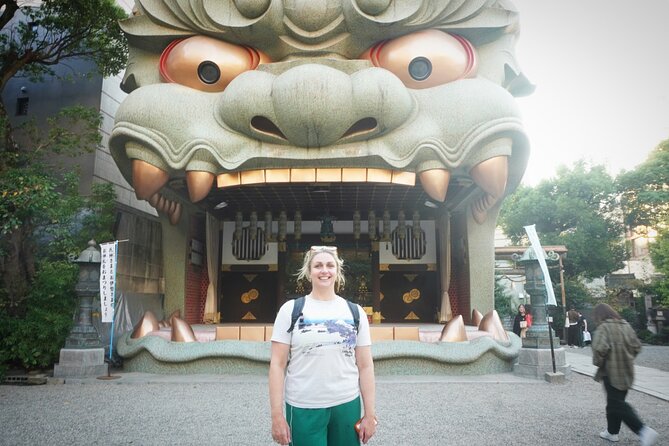
The final stop is Namba Yasaka Shrine, famous for its enormous lion head stage. It is an unforgettable visual finish, and it brings the tour back to religious culture after the modern districts and business center.
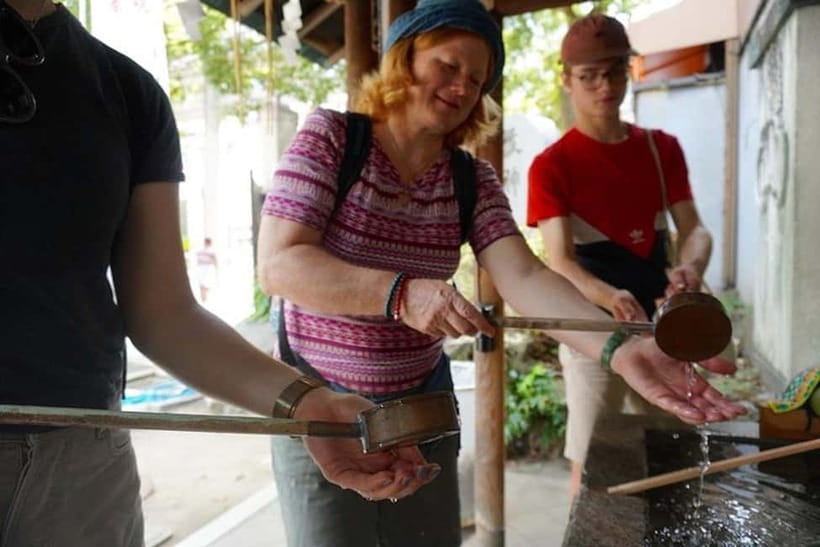
The guide explains the place of Shinto in Japanese life and how it continues to influence social and spiritual customs. The shrine offers a compact, striking stop that is easy to remember after a busy morning.
Ending here also makes practical sense for many visitors because it leaves you near one of Osaka’s major entertainment and shopping areas. The tour information does not promise a particular onward arrangement, so plan your own route after the visit. Still, finishing at Namba gives you plenty of options for lunch or further exploring.
The guides make or break this ride
The strongest praise centers on the guides, especially Ko. He is described as friendly, funny, careful, and highly fluent in English. His strength is not just naming buildings. He explains how Osaka developed, adds local anecdotes, answers questions, and keeps the ride from feeling like a memorized script.
Ko also seems alert to different comfort levels. He checks that riders feel safe, sets a manageable pace, and watches out for people who need extra help. Kosuke has also been praised for adding personal stories and a good mix of culture and history. Sukuna received similar praise for explanations and local recommendations.
One detail matters here: the tour has a maximum of seven people. That is small enough for the guide to notice if someone is falling behind or feeling unsure. A larger group would make city riding less relaxed and questions harder to manage.
There is one less glowing assessment in the feedback, describing a guide as somewhat clueless but still charming. That is worth noting because guide quality can vary by departure. The overall record is very strong, but no guided experience is perfectly identical every day.
Bikes, safety, and the real pace
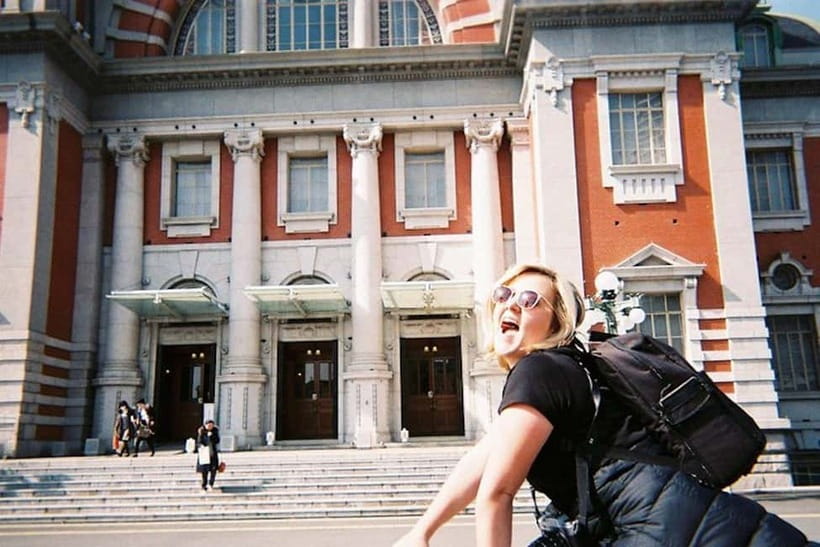
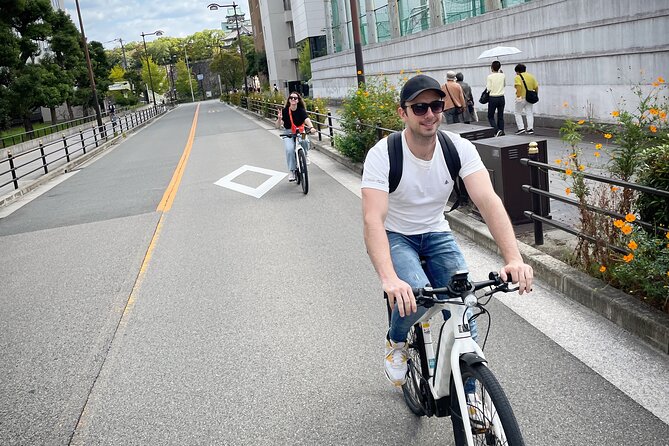
The electric bikes are included, along with helmets. Riders repeatedly describe the bikes as comfortable and easy to use. The pedal assist is especially helpful on slopes, and the guides set a leisurely pace rather than pushing for speed.
That does not mean you can ignore basic cycling ability. You need to ride a bicycle, follow the guide, and stay aware of the city around you. The route uses Osaka streets, and even respectful drivers cannot remove every challenge of urban cycling.
The published restrictions are important. The tour is not suitable for children under 14, anyone shorter than 140 centimeters, people over 70, or people with back, heart, mobility, or visual problems. It is also not suitable for people with low fitness levels. A 75-year-old rider did enjoy the tour with close attention from the guide, but that personal example does not override the stated age limit, so check the rules before booking.
Weather can affect comfort. One rider found the ride cold in February. Bring clothing suited to the season, since cycling can feel cooler than walking, especially when moving through open park areas.
Is $57 a fair price for three hours?
At $57 per person, this is not the cheapest way to see Osaka, but the price includes the electric bike, helmet, and a live English-speaking guide. You are paying for transport between districts as well as interpretation at the stops.
The value is strongest if your time in Osaka is short or your feet need a break. Several riders felt they saw more in three hours than they could have covered on foot or by train in much longer. You also avoid the effort of planning a route that links six very different areas.
The value is weaker if you prefer long visits inside museums, temples, or castle buildings. This is a broad city introduction, not a detailed tour of one attraction. You may still need separate visits to explore Osaka Castle or return to Den Den Town and America Town for shopping.
The small group helps justify the cost. With only seven places available, the experience is more attentive than a large coach outing. Free cancellation up to 24 hours before departure and the option to reserve now and pay later also reduce the risk when your schedule is still shifting.
Who should book this Osaka ride?
I would choose this tour for a first or second day in Osaka. It gives you a map in your head, introduces several neighborhoods, and helps you decide where to spend more time later.
It suits you especially well if you:
- Want to cover a lot of Osaka in a short outing
- Enjoy local history mixed with modern neighborhoods
- Are comfortable riding a bicycle
- Prefer a small group to a large sightseeing bus
- Like having a guide explain culture and local stories
- Want to save your legs for evening food and shopping
I would skip it if you cannot ride confidently, have health restrictions listed by the operator, or want a slow, detailed visit at each attraction. It may also disappoint you if your main goal is entering Osaka Castle or spending hours shopping in Den Den Town.
Should you book the Osaka E-Bike Tour?
Book it if you want a lively overview of Osaka that covers far more ground than walking. The combination of pedal assist, a seven-person limit, and guides such as Ko makes the tour unusually practical for first-time visitors.
Go in expecting a sampler, not six full attraction tours. You will see the city’s major contrasts, hear useful local context, and collect ideas for the rest of your stay. For $57, that is a good deal when your priority is understanding Osaka quickly and comfortably.
FAQ
How long does the Osaka E-Bike Tour last?
The tour lasts three hours.
How much does the tour cost?
The listed price is $57 per person.
What is included in the price?
A local guide, an electric bike, and a helmet are included.
Is the tour conducted in English?
Yes. The tour has a live English-speaking guide.
How many people can join the group?
The group is limited to seven participants.
Where is the meeting point?
The meeting point is outside the convenience store Lawson.
Can I cancel for a full refund?
Yes. You can cancel up to 24 hours in advance for a full refund.
Do I have to pay when I book?
The activity offers a reserve now and pay later option, so you can reserve your place without paying immediately.
Is the tour suitable for children?
No. It is not suitable for children under 14 years old.
Is the tour suitable for someone who cannot ride a bike?
No. You must be able to ride a bicycle to join the tour.
Just added around Japan
- Private E-MTB guided cycling around Mt. Aso volcano & grasslands★ 5.0 · 16 reviews
- Handmade Goshuin Book Experience Eco Friendly Upcycling in Tokyo★ 5.0 · 21 reviews
- Tokyo: West-Side Cycling and Food Tour with Guide★ 5.0 · 37 reviews
- Tokyo: Discover Traditional Tokyo Full-Day Bicycle Tour★ 4.7 · 131 reviews
- Tokyo: Rice Ball Making Class★ 5.0 · 14 reviews
- Tokyo: 3h Private E-bike Tours, Starting at Your Hotel★ 5.0 · 36 reviews
- Tokyo Bike Tour: Shibuya, Harajuku & Hidden Gems★ 5.0 · 20 reviews
- Tokyo: Private Cycling Tour with cute E-bike★ 5.0 · 11 reviews
E-Bike Tours, compared.
3-Hour Porto Highlights on a Electric Bike Guided Tour
Read our review →
Hills, Alfama, and Mouraria Tour by Electric Bike
Read our review →
Athens Scenic Electric Bike Tour with optional Acropolis visit
Read our review →
City Highlights 3-Hour Guided Electric Bike Tour
Read our review →
Rome EBike Tour: Appian Way, Catacombs & Roman Aqueducts
Read our review →
Top Highlights & Hidden Gems Tour by Cannondale E-Bike
Read our review →Browse the lists this tour appears in