
REVIEW · JAPAN
Handmade Goshuin Book Experience Eco Friendly Upcycling in Tokyo
Make your own Tokyo souvenir. This 50-minute workshop at Pink. ASAKUSA lets you create a personal goshuin book from kimono scraps, used paper bags, and wrapping paper. I like the hands-on design work, and I like that your finished book can be used at temples and shrines after class. The main drawback is that individual help may be limited if the host is handling another activity.
The setting is a small Japanese experience cafe and bar in Asakusa, an easy place to pair with temple visits and sightseeing. Guides such as Patricia and Karin are praised for clear instructions, patience, and friendly conversation. You choose your own materials, work at your own pace, and leave with something more personal than a shop-bought souvenir.
At $32.24 per person, the class is not the cheapest craft stop in Tokyo. Still, the price includes instruction, materials, and a useful keepsake with a direct connection to Japanese religious customs. The group is capped at eight people, which usually gives the session a relaxed feel.
Key Points Before You Book
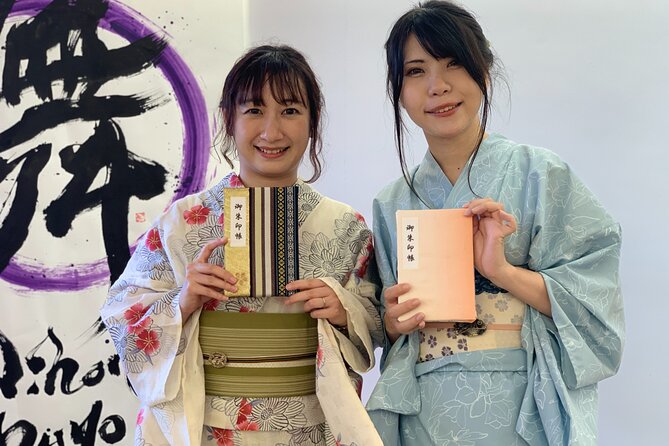
- Create a book from reused materials: Choose from scraps left over from kimono production, used paper bags, and wrapping paper.
- Learn how goshuin books are used: A goshuin records a visit to a Buddhist temple or Shinto shrine with a seal, handwritten information, and the visit date.
- Work in central Asakusa: The class begins and ends at Japanese Experience Cafe&BAR Pink.Asakusa, near public transportation.
- Suitable for beginners and families: The steps are simple, and guides provide support while leaving room for your own design.
- Small-group format: No more than eight people can join, though one past session had reduced host availability because of another event.
- A practical Tokyo souvenir: You can take the completed book to temples and shrines during the rest of your trip.
Why a Goshuin Book Makes a Better Souvenir
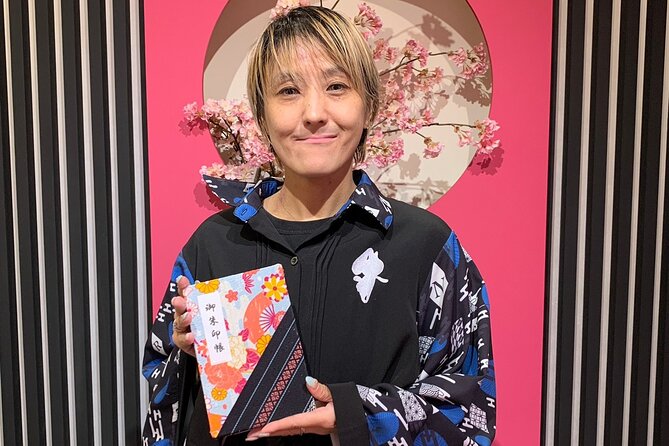
Many Tokyo souvenirs are attractive for a day and forgotten by the time you get home. A goshuin book has a job to do. You make it in Asakusa, then take it to temples and shrines to collect records of your visits.
A goshuin, often called a red seal, is proof that you visited a religious site. The temple or shrine name, the principal image or sacred figure, and the date are written in ink alongside the seal. The result is part memento, part travel record, and part introduction to a Japanese custom.
This workshop does not appear to include a temple or shrine stamp in the class itself. Instead, it gives you the book you need for later visits. That distinction matters. You are buying a creative activity and a prepared keepsake, not a guided religious tour.
I like this arrangement because it sends you back out into Asakusa with a reason to pay closer attention. Once you have made the book, a visit to a temple is no longer only about taking a photo. You have a small ritual to continue.
Other rides people book around Japan:
- Hidden Kyoto E-Biking tour
★ 5.0 · 1,843 reviews - Tokyo Guided Small-Group Biking Tour
★ 5.0 · 1,250 reviews - Bike Tour Exploring North Kyoto plus Lunch
★ 5.0 · 1,087 reviews
Arriving at Pink.Asakusa in Central Tokyo
The meeting point is Japanese Experience Cafe&BAR Pink.Asakusa, located at The Room Asakusa 4F, 1-16-11 Asakusa, Taito City, Tokyo 111-0032. The activity returns to this same location, so you do not need to arrange transport from a separate finishing point.
The cafe setting suits the workshop. You get a table, craft materials, and a place to work indoors for about 50 minutes. One participant also enjoyed ordering a smoothie, while another liked having matcha during the session. Drinks appear to be an optional part of the cafe setting rather than the main focus of the booking.
Because the venue is on the fourth floor, give yourself enough time to find The Room Asakusa and reach the cafe. The meeting point is near public transportation, but the supplied details do not identify a particular station or give step-by-step directions. Check the address carefully on your phone before setting out.
The room also gives you a useful break from sightseeing. Asakusa can fill a morning with temples, shops, and walking, so sitting down to make something can reset your pace, especially on a rainy day.
Choosing Kimono Scraps and Other Materials
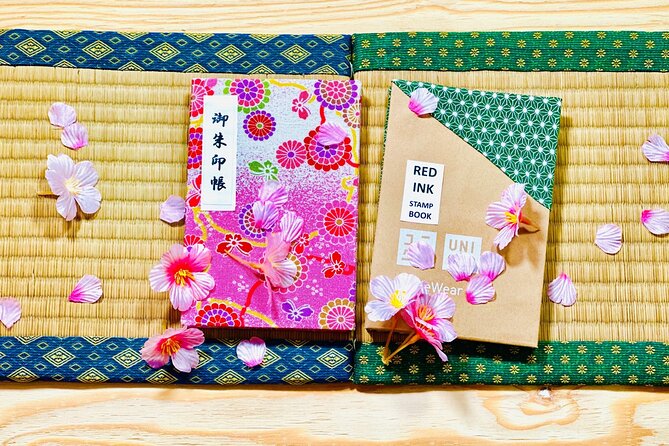
The first step is choosing the material for your cover. This is likely to be the most enjoyable part for anyone who likes color, texture, or pattern. The available materials include scraps from kimono manufacturing, used paper bags, and wrapping paper.
That reuse gives the activity a clear environmental purpose. Upcycling means taking items that might otherwise be thrown away and turning them into something with new value. Here, the idea is easy to understand because the old materials become the cover of an object you will use during your trip.
You may find yourself taking longer to choose than expected. The range of textiles is one of the most praised parts of the class, and the freedom to mix materials lets you make something simple or more detailed. You can choose a bold pattern, a quiet design, or a combination that matches your personal taste.
The host shows samples and explains the basic process before you begin. This is helpful because you do not need to arrive with a design already planned. You can copy the general structure of a sample, ask for advice, or make decisions as you go.
Cutting, Gluing, and Building the Book
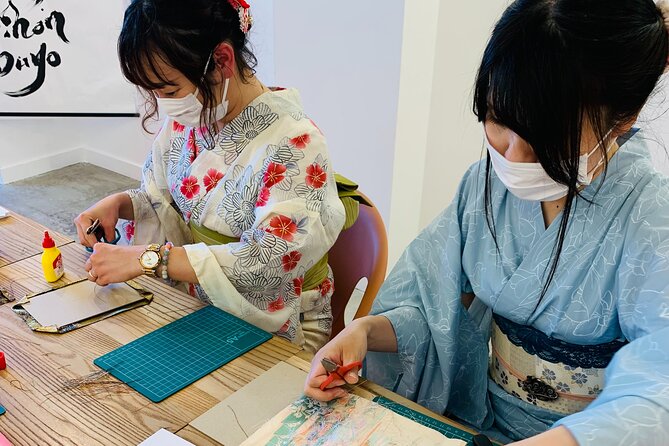
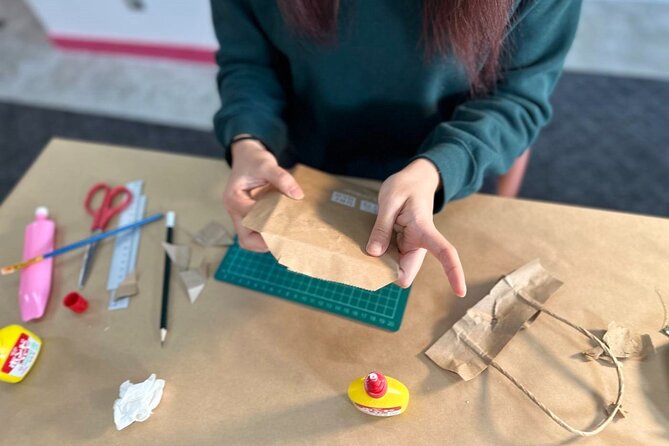
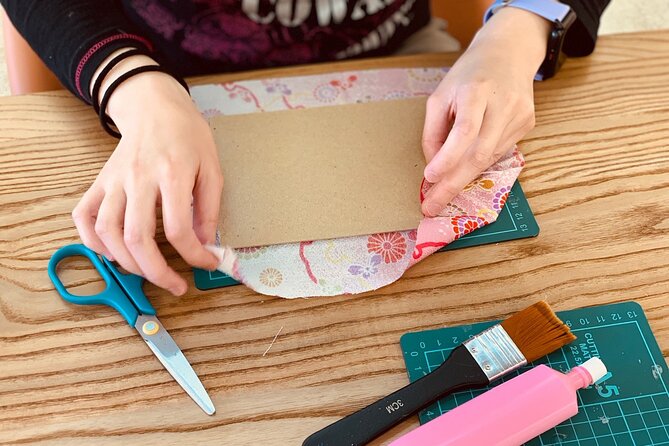
After choosing your materials, you cut them to fit the cover and attach them with glue. The craft itself is straightforward, but the finished look depends on small choices. Careful cutting helps the edges look neat, while the placement of patterns determines how the cover feels when the book is closed.
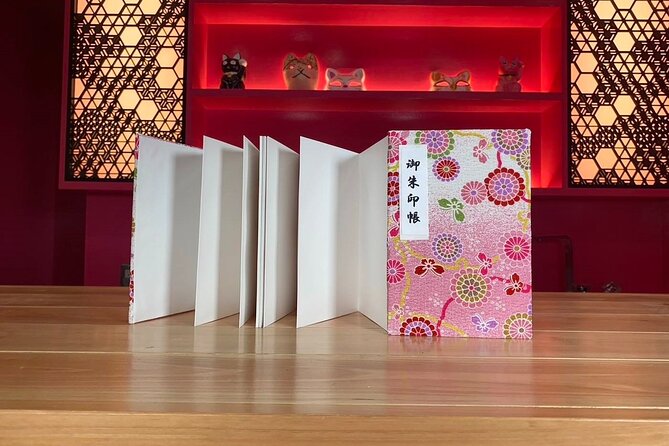
The next step is attaching the cover to the folded inner pages, described as the bellows text. This folded construction gives the book multiple writing surfaces for goshuin. You then add a title to the cover.
You do not need advanced crafting ability. The class has been enjoyed by people with different levels of experience, including family groups and complete beginners. The instructions are designed to be easy to follow, and the host can suggest ways to achieve the design you have in mind.
At the same time, this is not a tightly controlled production line. You have room to work at your own pace. If you enjoy making things, you can spend more time on the arrangement and finish. If you simply want a clean, attractive book, the basic version is manageable within the session.
The glue is the one part that rewards patience. You will want the material to sit flat before moving on, so avoid rushing just because the class is short. The full activity lasts approximately 50 minutes, giving you enough time for a finished book but not endless time for elaborate decoration.
Same roads, a different day in the saddle:
- Tokyo Great Cycling Tour
★ 5.0 · 811 reviews - Tokyo Top Highlights 3h Guided E-bike Tour
★ 5.0 · 714 reviews - 3h Tokyo E-Bike Tour: Hidden Gems, and Local Life with guide
★ 5.0 · 670 reviews - Arashiyama Bamboo Forest & Hidden Gems Bike Tour (Early Bird)
★ 5.0 · 613 reviews
The Guides and the Pace of the Session
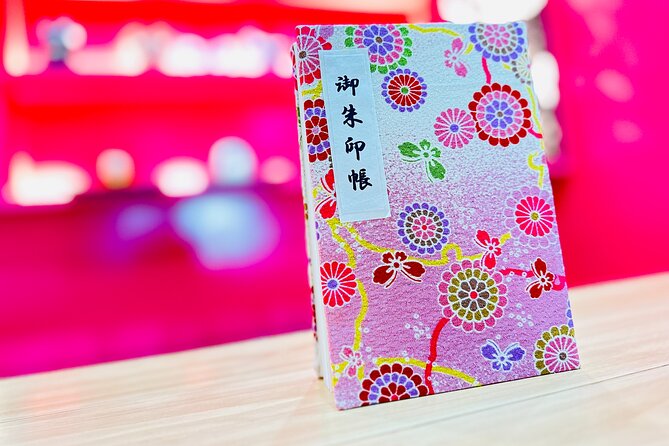
The quality of the host matters in a small craft class, and Patricia receives particularly warm praise for being cheerful, patient, and willing to help with design ideas. Karin is also described as clear and patient, with time for conversation during the work.
That friendly approach is important for visitors who do not know much about goshuin before arriving. The class gives you a short explanation of the custom, then moves into the craft. You get cultural context without sitting through a long lecture.
The best part of the format is the balance between instruction and freedom. You receive guidance at the start, then make your own decisions. This keeps the activity from feeling like a children’s worksheet or a rigid demonstration.
There is one fair caution. On one occasion, the host had to divide attention between this activity and another event connected with a shrine. That participant felt under-supported. The provider apologized and explained that only one staff member was available that day. With a maximum of eight people, the usual setup should be manageable, but you should not expect one-on-one attention every minute.
If you want detailed help with every cut and fold, tell the host early. If you prefer quiet creative time, the independent pace may suit you well.
The Value of a $32.24 Handmade Souvenir
At $32.24, this workshop costs more than buying a blank notebook. That comparison misses the main point, though. You are paying for the materials, the instruction, the cafe setting, and the chance to make an object tied to Japanese culture.
The value improves if you plan to visit several temples and shrines in Tokyo. A handmade book gives those visits a common thread, and each goshuin adds a dated record to the pages. You can also take the skill home and make similar books as gifts, an idea one participant especially appreciated.
The quality of the inner paper has been praised, which matters because a goshuin book needs to handle handwritten ink. The final object is not only decorative. It is meant to be carried, opened, and used.
The price also makes more sense for families or couples who want an activity rather than another sightseeing stop. You spend less than an hour making something together, and each person can create a different result from the same basic materials.
For a solo visitor focused only on low-cost sightseeing, the class may feel optional. For anyone seeking a personal souvenir and a short cultural activity, it offers solid value.
Who Will Enjoy This Asakusa Craft Class
This activity is a good match for:
- First-time visitors to Japan who want a gentle introduction to goshuin customs.
- Families looking for an indoor activity that works well in bad weather.
- Couples and friends who want to make matching or contrasting books.
- Creative people who like choosing colors, patterns, and materials.
- Slow-paced sightseers who need a seated break between Asakusa attractions.
- Souvenir shoppers who would rather take home something made during the trip.
It is also suitable for people who do not think of themselves as crafty. The basic process is accessible, and the host provides support. You can keep the design plain or add more detail if you enjoy the work.
It may be less suitable if you want a long workshop, advanced bookbinding instruction, or a tour of several temples. This is a compact craft session in a cafe. The cultural explanation supports the activity, but the main event is making the book.
The site is near public transportation, and most people can participate. There is a step down to the toilet, so anyone with mobility concerns should keep that detail in mind. No other special physical requirements are given.
How to Fit It Into an Asakusa Day
The class is easy to combine with other Asakusa plans because it begins and ends at the same cafe. You can schedule it at the start of your day, use the finished book during later temple visits, and turn the rest of the outing into a practical continuation of the workshop.
A morning booking can work well if you want a calm start. You make the book, perhaps order a drink, and then head out with a clear purpose for your sightseeing. Several people especially liked the class as a relaxing beginning to a Tokyo visit.
It also works after a rainy morning or a tiring stretch of walking. The workshop gives you a warm indoor table and a task that is engaging without being exhausting.
I would avoid placing it too close to another fixed reservation. The activity is scheduled for about 50 minutes, but you will want a little breathing room for finding the building, settling in, and finishing your design. The experience is usually booked about 15 days ahead, so reserve in advance if your Tokyo dates are fixed.
The cancellation policy is practical: you can cancel for a full refund up to 24 hours before the start time. Cancellations or changes made within 24 hours are not accepted for a refund.
Should You Book the Goshuin Book Experience?
Book it if you want a hands-on Tokyo memory that continues after the class. The combination of reused kimono materials, simple instruction, and later temple visits gives the activity more purpose than a short craft project alone.
I would especially recommend it to families, couples, first-time visitors, and anyone who values a souvenir with a story. Patricia and Karin add a warm human touch, and the small-group setting should feel more personal than a large workshop.
Skip it if your schedule is packed, your main goal is temple touring, or you would rather buy a finished notebook. Also keep the occasional staffing limitation in mind. Still, at $32.24, the class offers a useful object, a cultural introduction, and a pleasant break in Asakusa. For many visitors, that is a fair exchange for less than an hour.
FAQ
What is a goshuin book?
A goshuin book is used to collect red seals from Japanese temples and shrines. The site name, principal image, and date of the visit are written in ink alongside the seal.
Where does the activity take place?
It takes place at Japanese Experience Cafe&BAR Pink.Asakusa, at The Room Asakusa 4F, 1-16-11 Asakusa, Taito City, Tokyo 111-0032.
How long does the workshop last?
The activity lasts approximately 50 minutes.
How much does the experience cost?
The listed price is $32.24 per person.
What materials are used?
Materials include scraps from kimono manufacturing, used paper bags, and wrapping paper.
What will I do during the class?
You choose materials, cut and glue them onto the cover, attach the cover to the folded inner pages, and write a title on the cover.
Is the activity suitable for beginners?
Yes. Staff provide guidance, and most people can participate. The instructions are designed for people with different levels of crafting experience.
How many people can join?
The activity has a maximum capacity of eight participants.
Does the activity end at the meeting point?
Yes. The activity ends back at Japanese Experience Cafe&BAR Pink.Asakusa.
Can I cancel for a full refund?
Yes. You can cancel at least 24 hours before the start time for a full refund. Cancellations and changes made less than 24 hours before the start time are not accepted.
Just added around Japan
- Private E-MTB guided cycling around Mt. Aso volcano & grasslands★ 5.0 · 16 reviews
- Tokyo: West-Side Cycling and Food Tour with Guide★ 5.0 · 37 reviews
- Tokyo: Discover Traditional Tokyo Full-Day Bicycle Tour★ 4.7 · 131 reviews
- Tokyo: Rice Ball Making Class★ 5.0 · 14 reviews
- Tokyo Bike Tour: Shibuya, Harajuku & Hidden Gems★ 5.0 · 20 reviews
- Tokyo: Private Cycling Tour with cute E-bike★ 5.0 · 11 reviews
- Tokyo: 3h Private E-bike Tours, Starting at Your Hotel★ 5.0 · 36 reviews
- Tokyo: 2-Hour Night Bike Tour of the City’s Hidden Gems★ 4.9 · 25 reviews
Japan Cycling Tours, compared.


3h Tokyo E-Bike Tour: Hidden Gems, and Local Life with guide
Read our review →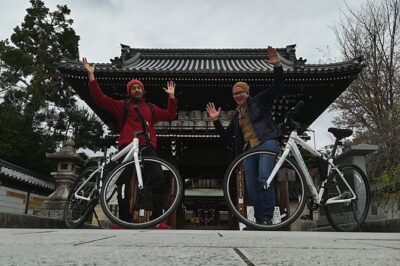
Arashiyama Bamboo Forest & Hidden Gems Bike Tour (Early Bird)
Read our review →
Hiroshima in a Nutshell: Morning Bike Adventure
Read our review →Browse the lists this tour appears in