
REVIEW · HIROSHIMA
Hiroshima 2hr Peace Cycling Tour with Local Guide
See Hiroshima beyond the usual memorial stops. This two-hour ride combines the major sites of Peace Memorial Park with quieter city streets, an approach that gives you both solemn history and a look at Hiroshima today. I like the electric bicycles, which make the flat route manageable, and the chance to hear local stories from guides raised in the city.
I also like the small group size, limited to 10 people, and the guides’ personal touch. Shin has shared family connections to the bombing, while Kana has earned praise for her clear English, warmth, and steady handling of the route. The main drawback is time: two hours pass quickly, especially if you want long stops at each memorial.
This is not a casual sightseeing spin with a few historical facts sprinkled in. The subject is painful, and the mood can turn serious without warning. Still, the cycling keeps the experience active, and the route helps you see how Hiroshima moved from wartime destruction to a functioning modern city.
Key points at a glance
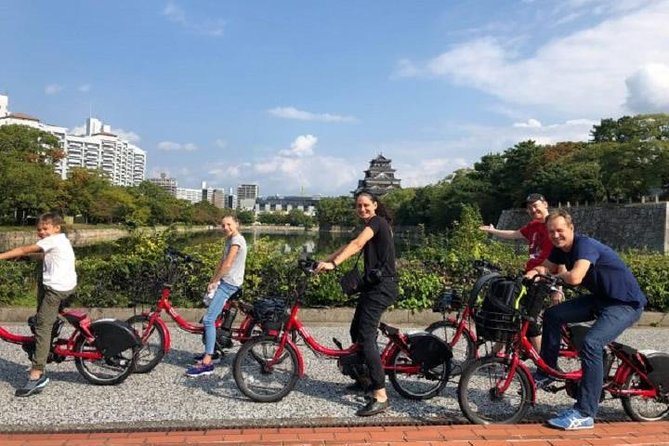
- Electric bicycles make the flat Hiroshima route easy, even if you are not a regular cyclist.
- The route covers the A-Bomb Dome, Cenotaph, Children’s Peace Monument, and Peace Bell in and around Peace Memorial Park.
- Local guides add family and city stories, including Shin’s connection to atomic bomb survivors.
- Small groups are capped at 10 people, allowing room for questions and a calmer pace.
- You see more than the memorial park, including suburban streets, surviving A-Bombed streetcars, and Hiroshima’s rebuilt city.
- Rain does not always cancel the experience, since you may switch to a walking route or receive a refund.
Why a bicycle works so well in Hiroshima
Hiroshima is well suited to a bicycle tour. The city is relatively flat, and the electric bicycles remove much of the effort from the ride. You still pedal, but the motor helps keep the pace comfortable. That matters when the focus is on listening, looking, and stopping rather than getting a workout.
The bicycles also let you cover ground that would take more time on foot. Peace Memorial Park is easy to explore by walking, but the ride adds streets and viewpoints beyond the core memorial area. You can move from the quiet park to ordinary neighborhoods, then return to the city’s central story without spending much time waiting for transport.
The route is described as leisurely, and that matches the practical details. The city is not as congested as Tokyo or Osaka, and the route has been manageable for people who do not cycle often. Still, cycling confidence matters. The group may adjust its speed to suit children or people who are less comfortable on bicycles, so the pace is not designed for a fast ride.
The electric bikes are especially useful in colder weather or light wind. One January outing involved cold conditions, while another took place in snowfall. The bicycle can still be enjoyable in such weather, but you should dress for the forecast rather than assume the motor will keep you warm.
More Guided Rides in Japan:
- Tokyo Guided Small-Group Biking Tour
★ 5.0 · 1,250 reviews - Tokyo Top Highlights 3h Guided E-bike Tour
★ 5.0 · 714 reviews - 3h Tokyo E-Bike Tour: Hidden Gems, and Local Life with guide
★ 5.0 · 670 reviews
Meeting at the Peace Park Rest House
The tour begins at the Rest House of Hiroshima Peace Memorial Park at either 11:00 or 15:00. The building is a clear meeting point near the main memorial area, and the tour returns there at the end.
Arrive early. The policy is strict if you are late without notice: the tour can be canceled with a full same-day charge. Even with advance contact, the operator says the activity may be canceled for the convenience of the other people in the group. That is a good reason to allow extra time for transport and finding the Rest House.
Do not plan to leave a large suitcase at the meeting point. There is no luggage storage at the Rest House. Coin lockers are available at the International Conference Center Hiroshima and at the Hiroshima Peace Memorial Museum, both about a six-minute walk away.
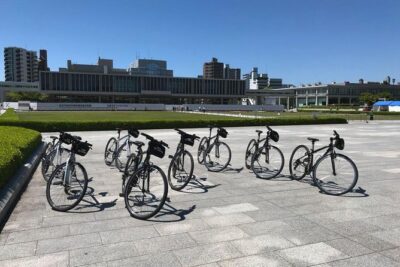
The bicycles and safety arrangements are included in the price, as is bicycle accident insurance. The tour uses a mixed group, with a maximum of 10 people. That limit gives the guide a better chance to answer questions and keep everyone together in the city.
The 55-minute heart of the tour: Peace Memorial Park
The first major section lasts about 55 minutes inside Peace Memorial Park. This is where the ride becomes a guided history experience rather than simply a way to get around.
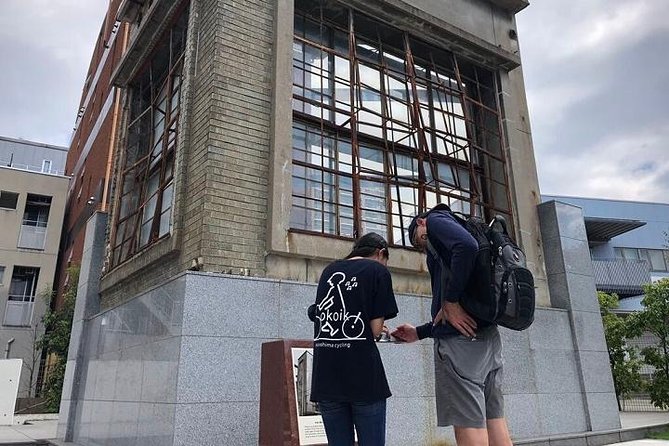
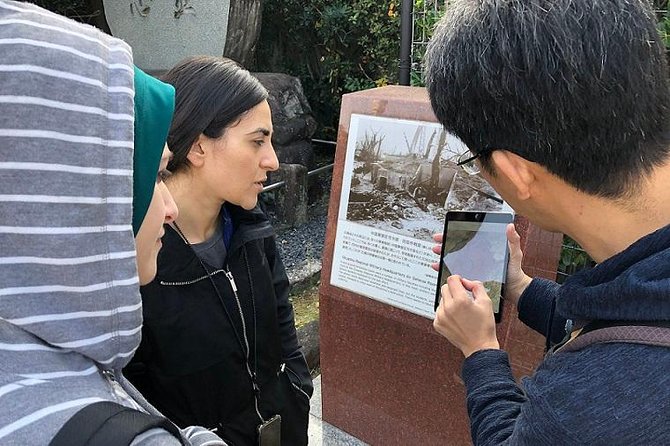
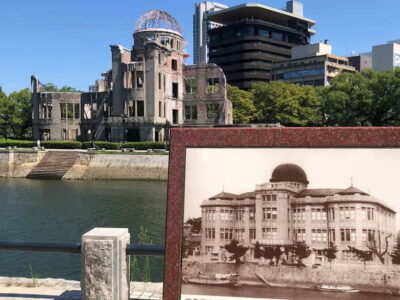
You visit the Atomic Bomb Dome, the Cenotaph for the A-Bomb Victims, the Children’s Peace Monument, and the Peace Bell. Each site carries a different message, and the guide explains the meaning behind the monuments rather than leaving you to read plaques on your own.
The A-Bomb Dome is the visual anchor. Seeing it from the park is powerful, but this tour also takes you to city viewpoints that offer a different angle. Those off-route views help you understand the Dome as part of Hiroshima’s city center, not as an isolated exhibit.
The Cenotaph and the Children’s Peace Monument bring the human cost into sharper focus. The guide discusses the memories held by these places and explains what happened in Hiroshima during and after the atomic bombing. The subject is handled with a focus on the people affected, the city’s recovery, and the continuing call for peace.
The Peace Bell adds another layer. You are not simply moving from one monument to another for photographs. The route connects the memorials so you can understand how Hiroshima presents its past and its message of never again.
You should also plan to visit the Hiroshima Peace Memorial Museum separately if your schedule allows. The bicycle tour does not replace the museum. Instead, it gives you a city-based framework for understanding the sites, then lets you see the rebuilt streets beyond the museum grounds.
Personal stories from Shin, Kana, and other guides
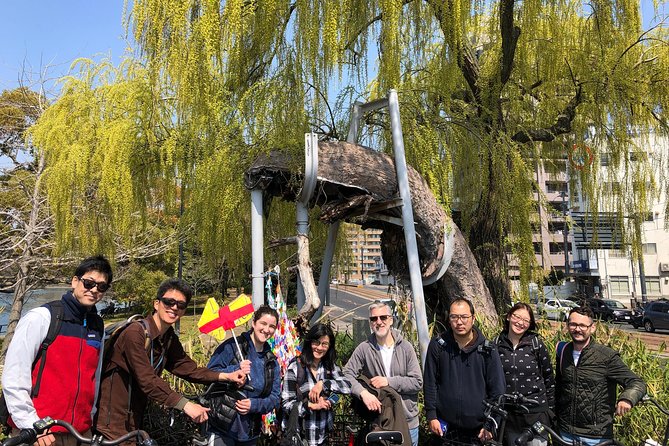
The guides are one of the strongest reasons to choose this tour. Shin has been praised for combining historical facts with family accounts. His connection is especially direct: his mother was in utero when the bomb fell, and his grandparents survived the bombing. Hearing how one family carried that experience across generations adds an intimate layer to the broader history.
Shin’s approach also includes warmth and humor, but the tone does not turn the subject into entertainment. The result is a serious conversation that still feels human. He has also helped people with practical suggestions for the rest of their Japan trip, including recommendations for Kyoto.
Kana has also received strong praise for her English, energy, and command of the subject. She is described as keeping the ride moving while giving careful explanations at each stop. She has also offered restaurant advice, which can be useful after a serious morning or afternoon.
The provider uses several guides, so you cannot guarantee a particular person unless the booking system allows you to request one. The quality of the experience may depend partly on your guide’s style. One public rating specifically noted that a guide did not have a family connection to Hiroshima, so personal survivor stories should be viewed as a possible feature, not a promise.
That distinction matters. You are booking a local-led history ride, not a guaranteed family testimony. The strongest guides appear to blend city knowledge, personal experience, and a clear focus on peace.
A few more days on two wheels around Japan worth a look
- Hidden Kyoto E-Biking tour
★ 5.0 · 1,843 reviews - Bike Tour Exploring North Kyoto plus Lunch
★ 5.0 · 1,087 reviews - Tokyo Great Cycling Tour
★ 5.0 · 811 reviews - Arashiyama Bamboo Forest & Hidden Gems Bike Tour (Early Bird)
★ 5.0 · 613 reviews
Beyond the monuments: Hiroshima’s rebuilt city
After the park, the route moves into Hiroshima itself for about an hour. This section is what separates the ride from a simple memorial walk.
You see how the city functions today, including suburban streets and ordinary urban areas that are easy to miss if you stay around the museum and Dome. The guide explains wartime destruction and post-war rebuilding while pointing out features of the present-day city.
One unusual detail is the A-Bombed streetcar. Hiroshima still has a train running today that survived the atomic bombing. Seeing this part of the transport network gives you a physical link between the city before the blast, the destruction that followed, and daily life after the war.
The ride also helps you notice the contrast between Hiroshima’s modern streets and the memorial sites. That contrast is not a distraction from the history. It is part of the story. The city was not preserved as a ruin. It was rebuilt, repopulated, and made into a working place where people live, commute, shop, and raise families.
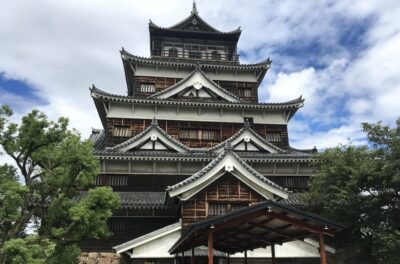
The tour does not spend as much time at Hiroshima Castle or on the city’s pre-war history. Those areas belong to the three-hour version, which adds the castle and gives more attention to different eras. If you want the war and post-war story in a compact format, the two-hour route is the better fit. If you want a broader history lesson and more time with the guide, the longer option may offer better value.
What two hours really gives you
The advertised schedule runs from 11:00 to 13:00 or from 15:00 to 17:00. The first few minutes are used for meeting and getting organized, then the route divides its time between Peace Memorial Park and the surrounding city.
That is enough time to see the main memorials and gain a sense of Hiroshima beyond the park. It is not enough for long, reflective stops at every site, a full museum visit, and a relaxed city tour all in one. I would treat the bike experience as one part of your Hiroshima day rather than the entire program.
A smart plan is to visit the museum before or after the ride, depending on your energy. If you visit the museum first, the outdoor stops may feel more meaningful. If you ride first, the museum can fill in details after the guide has given you the citywide picture.
The two-hour length is also helpful if you are fitting Hiroshima into a tight schedule. It leaves time for lunch, the museum, the castle, or a ferry elsewhere in the region. The tradeoff is that you may wish the guide could stop longer at some locations.
Price, group size, and overall value
At $59.69 per person, this is not the cheapest way to see Peace Memorial Park. You can walk through the park independently, and many of its outdoor memorials are accessible without a tour admission fee.
The price makes more sense when you count what is included: an electric bicycle, a local guide, a planned route beyond the central park, bicycle accident insurance, and a small group capped at 10. You are paying for context and access to parts of Hiroshima you might not reach on your own, not merely for transport.
The personal stories also affect the value. A guide such as Shin can connect a global event to family experience, while Kana’s clear explanations and route management make the ride easier for first-time visitors. You cannot guarantee a particular story or guide, but the guide-led format is the main reason to pay more than you would for a self-guided walk.
The tour is also a good value for families with mixed energy levels. Children under 15 can use children’s bicycles or adult bicycles at the child rate, provided they meet the size requirements. Two children’s bicycles are available for one booking. Electric bicycles with child seats are available for children under 22 kilograms and under 115 centimeters.
For adult bicycles, the minimum height is 145 centimeters. Children’s bicycles are intended for riders from 110 to 145 centimeters. Check these requirements before booking, since the ride is not suitable for every height or age combination.
Weather, pace, and practical limits
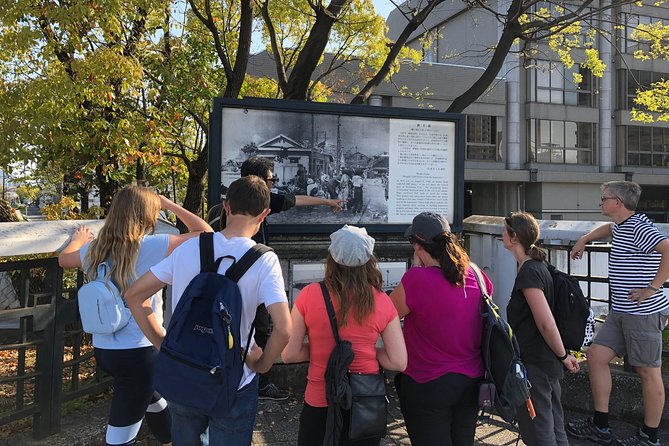
Weather can change the plan. If rain makes cycling unsafe, the tour may switch to a walking route that includes Peace Memorial Park, the Atomic Bomb Dome, the hypocenter, the Former Bank of Japan, Fukuromachi Elementary School, and the main street.
The rainy-day route is scheduled to last from 11:00 to 13:00 or from 15:00 to 17:00. It focuses on the hypocenter, the place that was reduced to scorched earth in an instant, and covers a walking area of roughly 0.5 to 1 kilometer around it.
You can choose the rainy-day walking option or request a refund if the cycling plan cannot operate because of rain. The activity may also be canceled for other safety reasons, including weather conditions. For a full refund when you cancel yourself, you must cancel at least 24 hours before the start time.
The pace may slow if a child or an inexperienced cyclist is in the group. That is fair for a shared tour, but strong cyclists should not expect a fast ride. The point is to see and listen, not race through the city.
Who should book this Hiroshima ride?
I would choose this tour if you want a guided introduction to Hiroshima that combines important memorials with the city’s present-day streets. It suits first-time visitors, families, people with limited time, and anyone who prefers an active tour to a long walking route.
It is also a good choice if you have already visited the A-Bomb Dome or museum. The ride adds viewpoints, suburban streets, the A-Bombed streetcars, and local stories that a museum visit cannot provide on its own.
You may want the three-hour option instead if Hiroshima’s castle, pre-war history, and post-war recovery are major priorities. You should also consider a walking tour if you are uncomfortable on a bicycle, though the electric bikes make the route much easier for most riders who meet the height requirements.
Should you book the Peace Cycling Tour?
Book it if you want to cover the major peace sites while also seeing the rebuilt city around them. The electric bicycles, small group, and strong guides such as Shin and Kana give the experience more substance than a simple ride through the park.
Skip it if you want a slow museum-focused day, a guaranteed survivor account, or a full historical tour of Hiroshima’s older sites. For most people with two free hours, though, this is a thoughtful and practical way to understand Hiroshima as both a memorial city and a living one.
FAQ
How long is the Hiroshima Peace Cycling Tour?
The tour lasts approximately two hours. It is scheduled from 11:00 to 13:00 or from 15:00 to 17:00.
Where does the tour begin?
The meeting point is the Rest House of Hiroshima Peace Memorial Park in Nakajimacho, Naka Ward, Hiroshima.
Where does the tour end?
The tour finishes back at the Peace Memorial Park Rest House.
What sites are included?
The route includes the Atomic Bomb Dome, the Cenotaph for the A-Bomb Victims, the Children’s Peace Monument, and the Peace Bell. It also includes parts of Hiroshima beyond the memorial park.
Are the bicycles electric?
Yes. Adult participants use electric bicycles. The route is generally easy because Hiroshima is flat and the bicycles provide assistance.
How many people can join the tour?
The shared tour has a maximum of 10 participants.
Can children join?
Yes. Children between 110 and 145 centimeters can use children’s bicycles, and children under 15 can use children’s or adult bicycles at the child rate. Adult bicycles require a height of at least 145 centimeters.
Is child seating available?
Electric bicycles with child seats are available for children under 22 kilograms and under 115 centimeters.
What happens if it rains?
The cycling tour may change to a walking route covering Peace Memorial Park, the Atomic Bomb Dome, the hypocenter, the Former Bank of Japan, Fukuromachi Elementary School, and the main street. If you do not want the walking option, a refund is offered when the cycling plan cannot operate because of rain.
Can I cancel for a refund?
You can receive a full refund if you cancel at least 24 hours before the experience begins. Cancellations or changes made less than 24 hours before the start time are not refundable.
Just added around Japan
- Private E-MTB guided cycling around Mt. Aso volcano & grasslands★ 5.0 · 16 reviews
- Handmade Goshuin Book Experience Eco Friendly Upcycling in Tokyo★ 5.0 · 21 reviews
- Tokyo: West-Side Cycling and Food Tour with Guide★ 5.0 · 37 reviews
- Tokyo: Discover Traditional Tokyo Full-Day Bicycle Tour★ 4.7 · 131 reviews
- Tokyo: Rice Ball Making Class★ 5.0 · 14 reviews
- Tokyo: 3h Private E-bike Tours, Starting at Your Hotel★ 5.0 · 36 reviews
- Tokyo Bike Tour: Shibuya, Harajuku & Hidden Gems★ 5.0 · 20 reviews
- Tokyo: Private Cycling Tour with cute E-bike★ 5.0 · 11 reviews
Hiroshima Cycling Tours, compared.
Hiroshima in a Nutshell: Morning Bike Adventure
Read our review →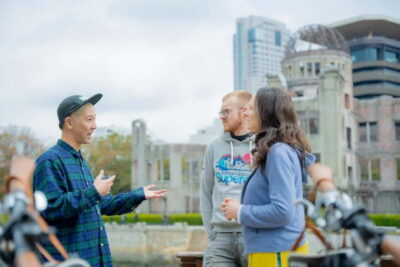
Browse the lists this tour appears in