
REVIEW · HIROSHIMA
Hiroshima: Peace Cycling Tour with Local Guide
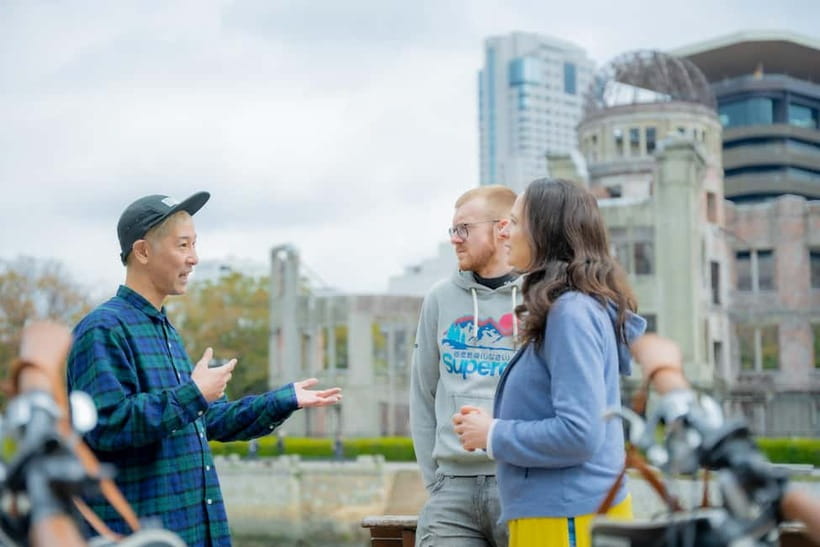
Hiroshima tells its story beyond the museum. This 2 to 3 hour ride pairs comfortable electric bicycles with local accounts of the atomic bombing, taking you from the Peace Memorial Park into ordinary neighborhoods that many sightseeing plans skip. I like the personal touch from guides such as Shin, Kana, Moe, and Bella, whose family stories give the subject a human scale. I also like the gentle pace and small groups, limited to 10 people. The main drawback is that cycling remains part of the deal, and tall riders may find the compact bikes a little tight.
The tour is especially useful if you have only one day in Hiroshima. You cover the central memorial area quickly, then follow the damage and recovery story farther into the city. Just remember that this is not a general city tour. Its focus is Hiroshima before, during, and after August 6, 1945.
Key points at a glance
- Local stories make the history personal: Guides may share family connections to the bombing, including stories passed down through parents and grandparents.
- The route reaches beyond Peace Park: You visit suburban streets, surviving trees, bridges, hospitals, railway sites, and other A-bomb heritage places.
- Electric bikes keep the ride manageable: The route covers small distances, so you do not need to be especially fit, but you must be able to ride a bicycle.
- The three-hour route offers more context: It includes Hiroshima Castle, Gokoku Shrine, Central Park, Peace Boulevard, and several sites away from the main tourist area.
- The $52 price buys more than transport: You get a bicycle, an English-speaking guide, bicycle accident insurance, and photos taken during the tour.
- Prepare for weather and sizing: Bring water, a towel, comfortable clothing, and sensible shoes. Tall riders and families needing child seats should check arrangements ahead of time.
Why cycling suits Hiroshima’s story
Hiroshima’s central sights are easy to reach on foot, but the city’s atomic bombing story spreads well beyond the Atomic Bomb Dome. The area within roughly 2.5 kilometers of the hypocenter suffered severe damage, and the evidence is scattered across streets, bridges, railway lines, trees, and medical buildings.
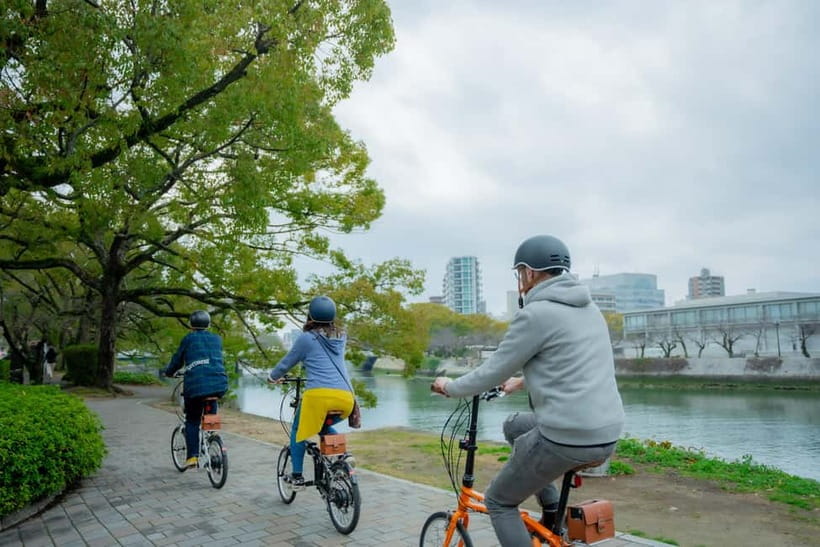
A bicycle gives you a better sense of that distance. You move from a famous memorial to a regular city street, then to another place carrying a quieter part of the story. That change matters. It shows both the scale of the destruction and the extent of the rebuilding that followed.
The electric assistance is helpful rather than flashy. The route is not presented as a sporting challenge. You ride at a comfortable pace, stopping often while the guide explains what happened at each location. Several people have found the bikes easy to operate, including those who would not normally choose a long cycling excursion.
You still need basic bike confidence. This is a shared ride on city streets, and the guide may slow down if someone in the group is not used to cycling. That makes the experience more welcoming, but it also means the pace is not entirely in your control.
More Guided Rides in Japan:
- Tokyo Guided Small-Group Biking Tour
★ 5.0 · 1,250 reviews - Tokyo Top Highlights 3h Guided E-bike Tour
★ 5.0 · 714 reviews - 3h Tokyo E-Bike Tour: Hidden Gems, and Local Life with guide
★ 5.0 · 670 reviews
The two-hour ride: a focused introduction
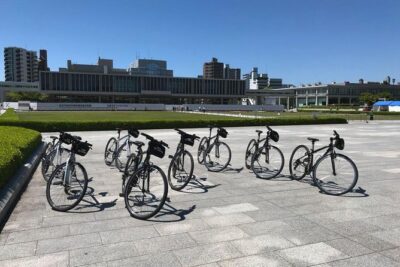
The shorter route meets at the Rest House in Hiroshima Peace Memorial Park. The meeting point is practical: from Hiroshima Station, take the Hiroshima Electric Railway to Atomic Bomb Dome Station, a journey of about 20 minutes, then walk roughly five minutes.
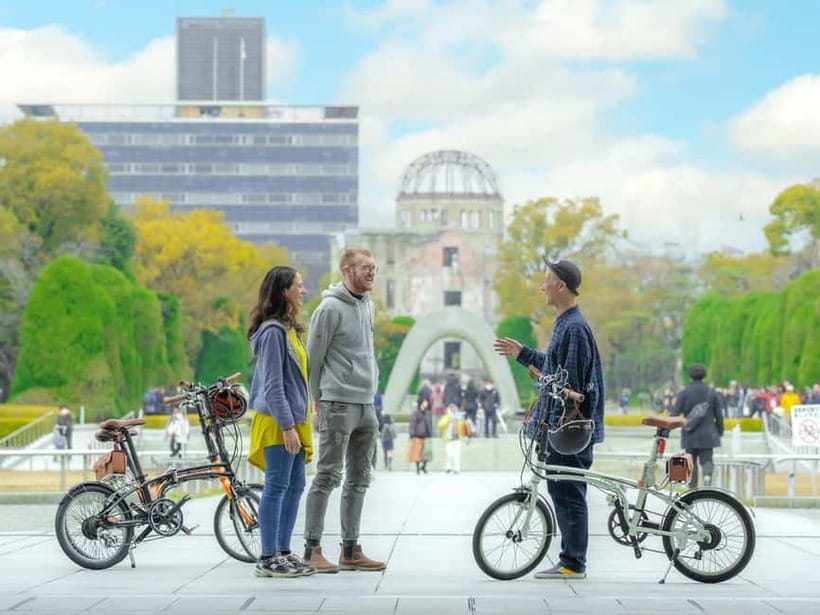
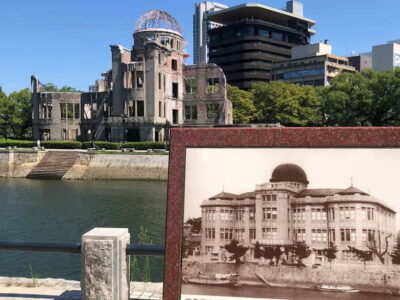
The first hour centers on Peace Memorial Park. Your guide explains why the park was created, what the monuments represent, and how the Atomic Bomb Dome became one of the city’s most recognizable symbols. This is a useful orientation before you visit the Peace Memorial Museum, if that is also on your plan.
The guide’s approach is not limited to dates and names. Shin, in particular, has shared stories passed down through his family, while Kana and Moe have also brought local and family connections into their explanations. These accounts can make the subject more immediate, though they also make this a serious experience. You should expect moments of sadness and reflection rather than a light sightseeing ride.
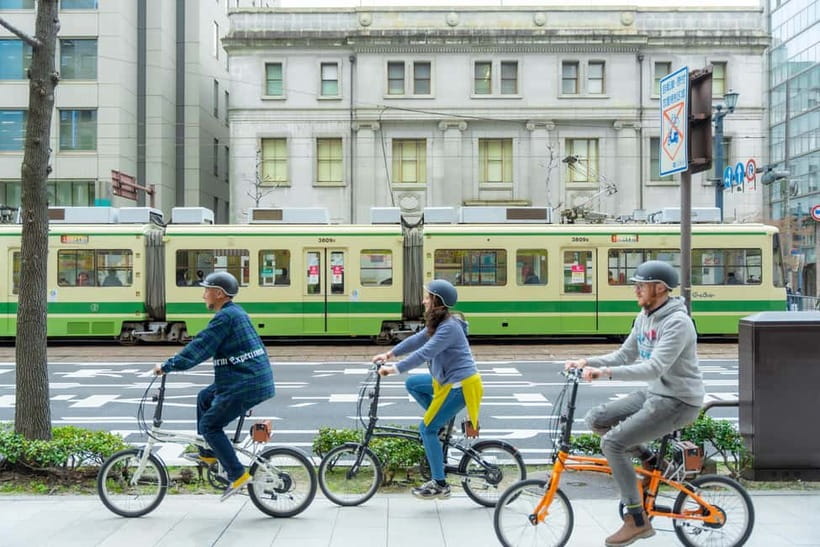
After Peace Park, the tour moves toward the suburbs. One of the distinctive details is the A-bombed streetcar, a tram that survived the blast and still runs today. Seeing a working part of Hiroshima’s transport system linked to August 6 gives the past a physical presence that a display case cannot quite match.
The rest of the route shows how the city recovered. You ride through areas that are now green and active, stopping at additional sites connected to the bombing. The tour ends back at the meeting point after about two hours.
This version suits you if you have a tight schedule, want an introduction before visiting the museum, or prefer not to spend three hours on a bicycle. It gives you the central story without turning your entire morning or afternoon into a single activity.
The three-hour route: more sites and a wider picture
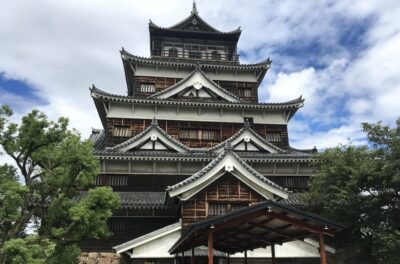
The longer course begins at Hiroshima Castle. The castle provides a useful starting point because it places the atomic bombing within the city’s broader story, rather than treating August 6 as an isolated event.
From there, you continue to Hiroshima Gokoku Shrine and its shrine gate, then pass through Hiroshima Central Park. These early stops help you see the city as a living place, not only as a memorial destination.
At Aioi Bridge, the route reaches a major point in the bombing story. The Atomic Bomb Dome follows soon after, giving you time to consider the building from close range and hear about its place in Hiroshima’s memory.
The ride then follows the Motoyasu River and crosses or visits the Peace Bridge area. Rivers and bridges are central to understanding how the city was laid out, and they also help explain why the memorial zone looks the way it does today.
At Higashisenda Park, the tour begins to move farther from the most familiar sights. The Hiroshima Red Cross Hospital is another important stop, linking the bombing to medical care and the overwhelming human impact that followed. The guide explains the site rather than simply pointing it out, which is where a local-led route earns its price.
The itinerary continues to Hiroshima Railway, Miyuki Bridge, and the Kobayashi River. You also see a surviving weeping willow tree, a small but powerful reminder that not everything was erased. The final stretch follows Peace Boulevard before returning to the meeting point.
The three-hour itinerary is the better choice if you want the city’s wider A-bomb story. It also makes the activity feel less like a ride between two famous landmarks and more like a guided reading of Hiroshima itself. The tradeoff is simple: you spend more time cycling, and the subject matter can feel emotionally heavy over several hours.
What makes the guides important
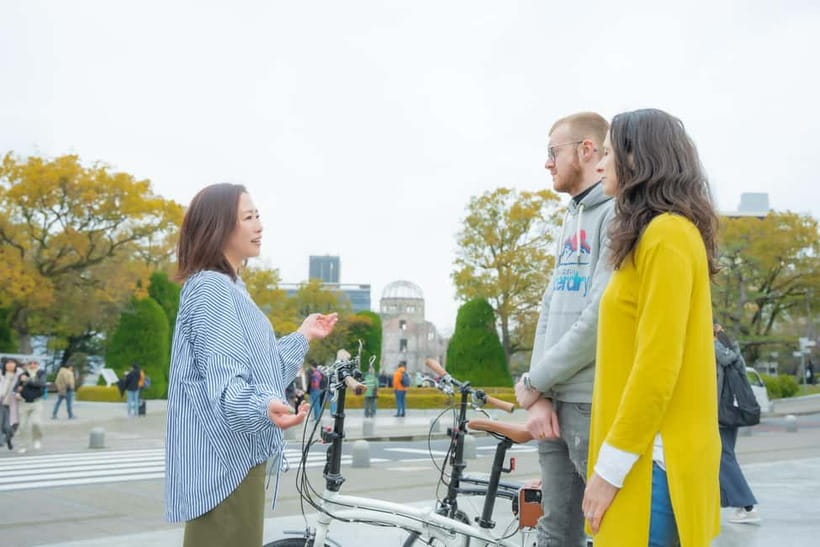
The guide is the heart of this experience. The bicycles help you cover ground, but the stories explain why each stop matters.
Shin has been praised for his energy, humor, and strong English, along with family connections to the bombing. His style appears to balance painful facts with a message of hope and peace. That balance is valuable in Hiroshima, where a guide can easily make the experience either too clinical or too bleak.
Kana has also received strong praise for mixing facts, personal family experiences, and a warm approach. Moe has shared family stories while keeping the ride organized and considerate. Bella, also referred to as Kana, has been particularly attentive to comfort, carrying wet towels, salt candies, and cooling items during hot weather.
You should not expect every guide to tell precisely the same stories. The team’s local connection is part of the appeal, but the experience will naturally vary by guide. That is not a weakness. It means the tour has a human voice rather than a memorized script.
The English ability has generally been strong, and the group size allows time for questions. If you want a silent ride with only occasional commentary, this is not the right activity. If you want to ask how Hiroshima remembers the bombing today, the format gives you a good chance to do so.
A few more days on two wheels around Japan worth a look
- Hidden Kyoto E-Biking tour
★ 5.0 · 1,843 reviews - Bike Tour Exploring North Kyoto plus Lunch
★ 5.0 · 1,087 reviews - Tokyo Great Cycling Tour
★ 5.0 · 811 reviews - Arashiyama Bamboo Forest & Hidden Gems Bike Tour (Early Bird)
★ 5.0 · 613 reviews
How heavy is the subject?
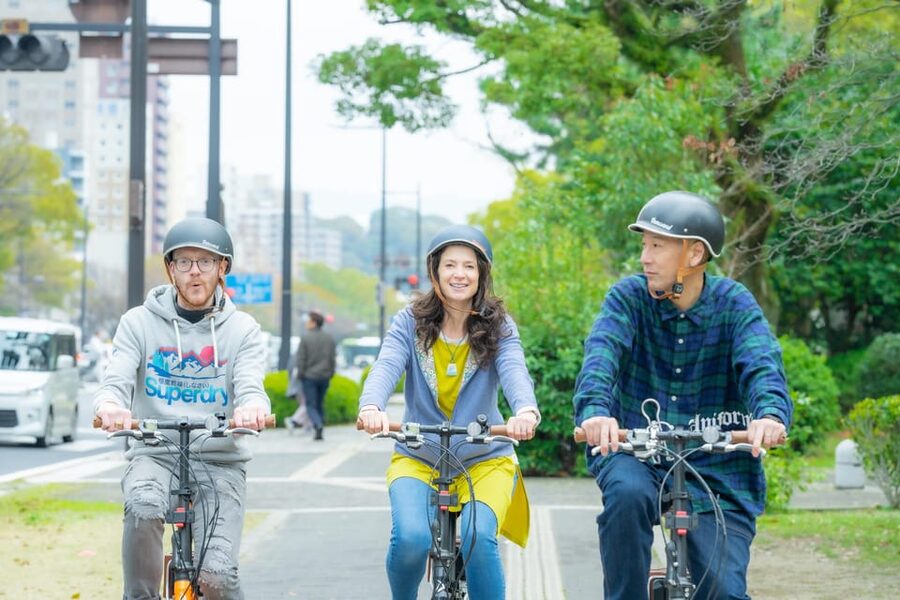
This is a peace and remembrance tour, not a cheerful sightseeing circuit with a little history added. You will hear about destruction, deaths, survivors, and the long effects of the bombing. The guide may also share stories involving parents, grandparents, or other relatives.
At the same time, the experience is not designed to leave you without hope. The central theme is the rebuilding of Hiroshima and the city’s continued message of peace. You see greenery, functioning transport, parks, hospitals, bridges, and ordinary streets where life has returned.
That contrast is one of the tour’s strengths. You are not only shown what was destroyed. You are also shown what Hiroshima has made of the years since. Several guides close difficult stops with ideas of courage, healing, and peace, which helps give the ride a clear purpose.
I would place this activity before or after a visit to the Peace Memorial Museum, depending on your style. If you prefer context first, cycle before entering the museum. If you want the museum’s exhibits to prepare you for the streets, ride afterward. Allow yourself a little quiet time after either visit.
Comfort, bikes, and family details
The adult electric bicycles are intended for people at least 145 centimeters tall. A rider around 6 feet 1 inch found the frame small, so tall cyclists should keep that in mind. The bikes may be comfortable for most riders, but they are not presented as large touring bicycles.
Children’s arrangements are available, with some limits:
- Child seats on electric bicycles are for children under 22 kilograms and under 115 centimeters.
- Children’s cross-bike bicycles are intended for children from 110 to 145 centimeters.
- Children under 15 can use the child rate on either children’s bicycles or adult bicycles.
- Infant seats and children’s bicycles are limited, so contact the operator before booking if you need one.
The activity is not suitable for anyone under 145 centimeters according to the main suitability information, although child equipment can be arranged in certain cases. This apparent overlap makes it especially important to confirm the right bicycle before you reserve.
Wear comfortable shoes and clothes. High heels are not allowed. Bring water and a towel, especially in warm months. Hiroshima’s summer heat can make a cycling stop feel much longer, and guides have sometimes carried cooling supplies for the group.
The tour includes bicycle accident insurance, but that does not remove the need to ride carefully. It is a shared group, and the guide may adjust the pace for children or less confident cyclists.
Is $52 good value?
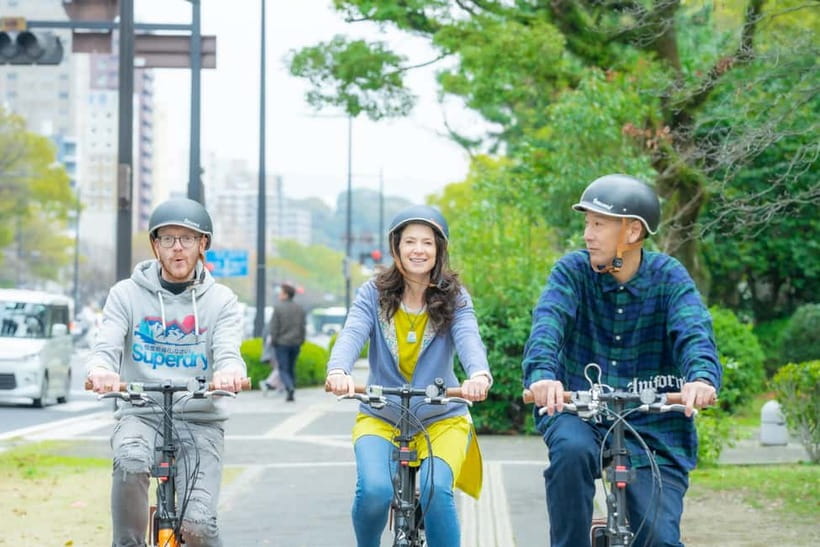
At $52 per person, the tour is reasonably priced for a small guided activity lasting two or three hours. The fee includes the electric bicycle, an English-speaking guide, bicycle accident insurance, and digital copies of photos taken during the day.
The value is strongest if you want interpretation rather than simple transport. You could walk around Peace Park for free, and the Atomic Bomb Dome and many public areas cost nothing to view. What you cannot easily reproduce is the route into less familiar neighborhoods, the explanations at multiple A-bomb sites, and the chance to ask a local guide how the city remembers the event.
The longer route offers better value if your schedule allows it because you see more sites and cover more of Hiroshima’s recovery story. The two-hour option still makes sense if you plan to spend time in the museum, visit Miyajima, or leave Hiroshima later that day.
Food and drinks are not included. Plan a meal or snack before or after the ride rather than expecting a stop built into the itinerary.
Timing, groups, and cancellation details
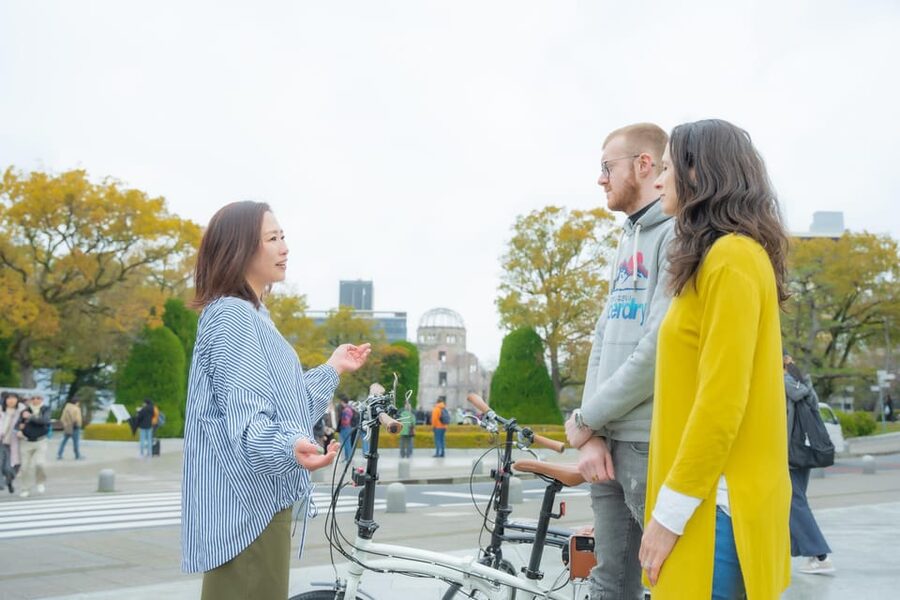
There are morning and afternoon departures. The shorter course is listed around 11:00 and 15:00, while the longer course begins around 10:00 and 14:00. The timetable can change on the day, so avoid scheduling a tight connection immediately afterward.
The group is limited to 10 people. That is small enough for questions and safer riding, though the pace can be affected by the least experienced cyclist in the group.
You must arrive on time. If you are late without prior notice, the tour can be cancelled and the full same-day fee charged. Cancellation is free up to 24 hours before the activity, and reserve-now, pay-later booking is available.
Who should book the Hiroshima cycling tour?
I would recommend it to first-time visitors who want to understand Hiroshima beyond the Atomic Bomb Dome. It is also a good fit for families with older children, solo visitors who like meeting a small group, and anyone who prefers moving through a city instead of sitting through a long lecture.
Choose the three-hour version if you want the fullest route and have room in your schedule. Choose two hours if you want a compact introduction or plan to give the museum and Peace Park more time on foot.
You should skip it if you cannot ride a bicycle, dislike shared tours, or want to explore Hiroshima’s food, shopping, and castle culture in equal measure. The focus is firmly on the atomic bombing, its local memory, and the city’s recovery.
For most visitors who are comfortable on a bike, I think this is a thoughtful and useful way to see Hiroshima. Book it for the local perspective, the surviving streetcar, the quieter A-bomb sites, and the chance to understand how a damaged city became a place centered on peace.
FAQ
Where does the Hiroshima Peace Cycling Tour meet?
The meeting point is the Rest House in Hiroshima Peace Memorial Park. From Hiroshima Station, take the Hiroshima Electric Railway to Atomic Bomb Dome Station, then walk about five minutes.
How long does the tour last?
You can choose a route lasting about two hours or a longer route lasting about three hours. The available start times depend on the selected course.
Is the tour conducted in English?
Yes. The tour includes a live English-speaking guide.
How many people can join the group?
The shared tour is limited to 10 participants.
Are electric bicycles included?
Yes. Bicycle rental is included, along with bicycle accident insurance.
Can children join the tour?
Reservations are available for children aged 1 and older. Child seats and children’s bicycles are limited, so contact the operator before booking if you need this equipment.
What should I bring?
Bring comfortable shoes, comfortable clothing, a towel, and drinks. High-heeled shoes are not allowed.
What happens if I arrive late?
If you are late without prior notice, the tour may be cancelled. A 100 percent same-day cancellation fee can apply and is non-refundable.
Just added around Japan
- Private E-MTB guided cycling around Mt. Aso volcano & grasslands★ 5.0 · 16 reviews
- Handmade Goshuin Book Experience Eco Friendly Upcycling in Tokyo★ 5.0 · 21 reviews
- Tokyo: West-Side Cycling and Food Tour with Guide★ 5.0 · 37 reviews
- Tokyo: Discover Traditional Tokyo Full-Day Bicycle Tour★ 4.7 · 131 reviews
- Tokyo: Rice Ball Making Class★ 5.0 · 14 reviews
- Tokyo: 3h Private E-bike Tours, Starting at Your Hotel★ 5.0 · 36 reviews
- Tokyo Bike Tour: Shibuya, Harajuku & Hidden Gems★ 5.0 · 20 reviews
- Tokyo: Private Cycling Tour with cute E-bike★ 5.0 · 11 reviews
Hiroshima Cycling Tours, compared.
Hiroshima in a Nutshell: Morning Bike Adventure
Read our review →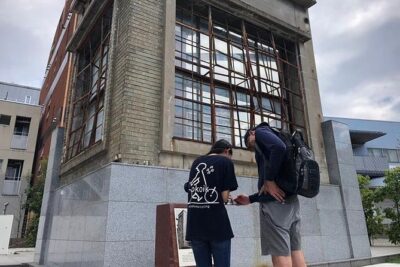
Hiroshima 2hr Peace Cycling Tour with Local Guide
Read our review →
Browse the lists this tour appears in