
REVIEW · HIROSHIMA
Hiroshima: Best of Hiroshima Guided Bike Tour
Hiroshima tells its story best on two wheels. This 3.5-hour ride links the Peace Memorial Park, Atomic Bomb Dome, Gokoku Jinja, Hiroshima Castle, and Shukkei-en Garden without making you spend the day on buses or wear out your feet. I especially like the flat route and the chance to reach quiet corners that cars cannot access. The small groups of up to eight also give the guide room to answer questions and adjust the pace.
The tour is strongest when the guide connects the sights with personal stories. Guides including Awais, Aimee, Miyu, James, Ehsan, and others have earned praise for clear English, thoughtful storytelling, and a friendly manner. You should know, though, that this is not a casual sightseeing spin only. The subject matter is serious, the route depends on good weather, and the activity is not suitable for children under 12, pregnant women, or people with certain medical conditions.
Key points at a glance
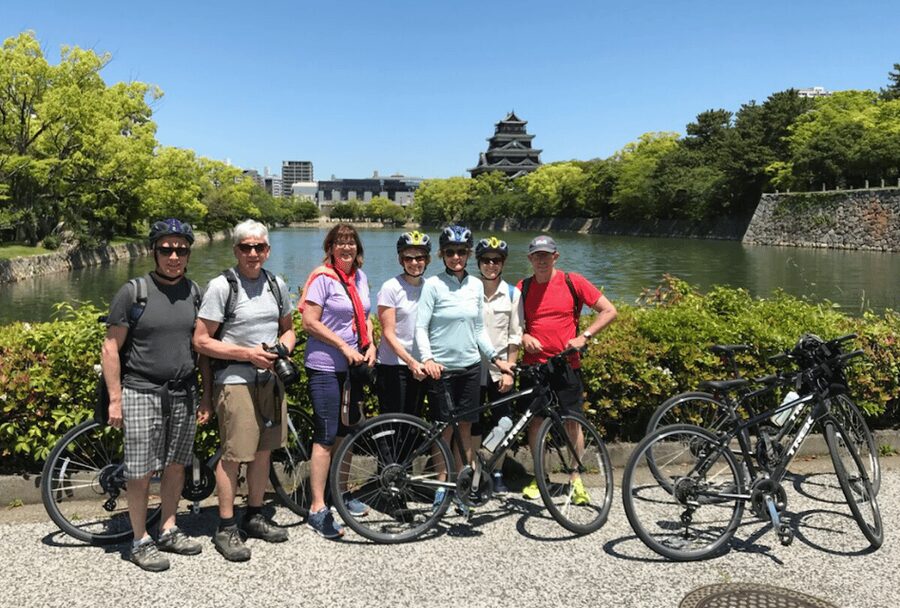
- A gentle route through Hiroshima’s major sights: The nearly flat course makes the tour manageable even if you have not ridden recently.
- A thoughtful Peace Memorial Park visit: You stop at major monuments and have time to ask questions about August 6, 1945.
- More than the atomic bomb story: Hiroshima Castle, Gokoku Jinja, and Shukkei-en Garden show the city’s samurai, religious, and cultural sides.
- A practical way to cover ground: The ride is about 10 kilometers, with regular stops for photos, explanations, and breaks.
- Good bike choices: Trek bikes, step-through models, e-bikes, child-sized bikes, helmets, and bottled water are included.
- A strong guide-led experience: The guide makes the difference, especially at the Peace Park, where context matters as much as the monuments.
Why cycling works so well in Hiroshima
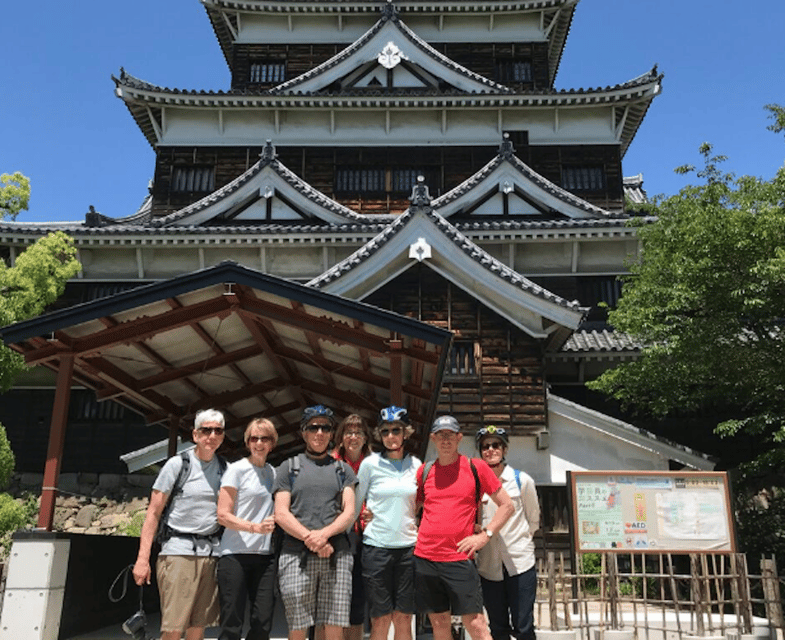
Hiroshima’s central sights sit close enough together to visit in one day, but far enough apart that walking between them can take more time and energy than expected. A bike solves that problem neatly. You cover ground quickly, get fresh air along the riverside, and avoid spending much of your limited sightseeing time waiting for transport.
The route is described as completely flat, and the ride is intended for anyone who can ride a bike. That does not mean you need to be a keen cyclist. The pace is generally relaxed, and the group stops often. One ride covered roughly 10 kilometers, which sounds like a lot on paper but is spread across three and a half hours with frequent pauses.
I like the balance here. You are not simply pedaling past sights while trying to keep up. At each main stop, you get off the bike, listen, take photos, and have time to look around. Several guides have also offered photos and videos for people in the group, a small touch that helps solo visitors and couples alike.
The ride can be especially useful in warm weather. One August group stopped regularly because of the heat, and the guide even brought the group to a local food spot for a quick bite. On cooler or rainy days, the pace and conversation help keep the outing comfortable, but you still need to dress sensibly and accept that weather can affect the experience.
More Guided Rides in Japan:
- Tokyo Guided Small-Group Biking Tour
★ 5.0 · 1,250 reviews - Tokyo Top Highlights 3h Guided E-bike Tour
★ 5.0 · 714 reviews - 3h Tokyo E-Bike Tour: Hidden Gems, and Local Life with guide
★ 5.0 · 670 reviews
Starting at Cycle Hiroshima HQ
You meet at Cycle Hiroshima HQ, marked by a large Cycle Hiroshima sign. The tour begins with a short orientation, bike fitting, and helmet setup. Arrive early enough for this initial adjustment, particularly if you need a specific frame size or want to consider an e-bike.
The bike selection is a real advantage. The standard fleet uses Trek bikes, with several sizes available. Step-through bikes make mounting easier, while e-bikes can help if you want extra assistance or simply prefer not to work hard in warm weather. Child-sized bikes are available, although the tour itself is not suitable for children under 12 according to the stated restrictions, so families should confirm the current rules before booking.
Comfortable clothes and shoes are the sensible choice. Bring only what you need, since you will be cycling and stopping repeatedly. A helmet and bottled water are included, so you do not need to arrange those yourself.
The group limit of eight matters. A small group is easier to manage on city paths, and it lets you hear the guide without a struggle. It also gives the guide more time to respond to questions and help with photos. The exact personality of the outing depends on the guide, but the strongest feedback consistently points to guides who are friendly, careful, and able to explain difficult subjects with respect.
Riverside cycling to the Peace Memorial Park
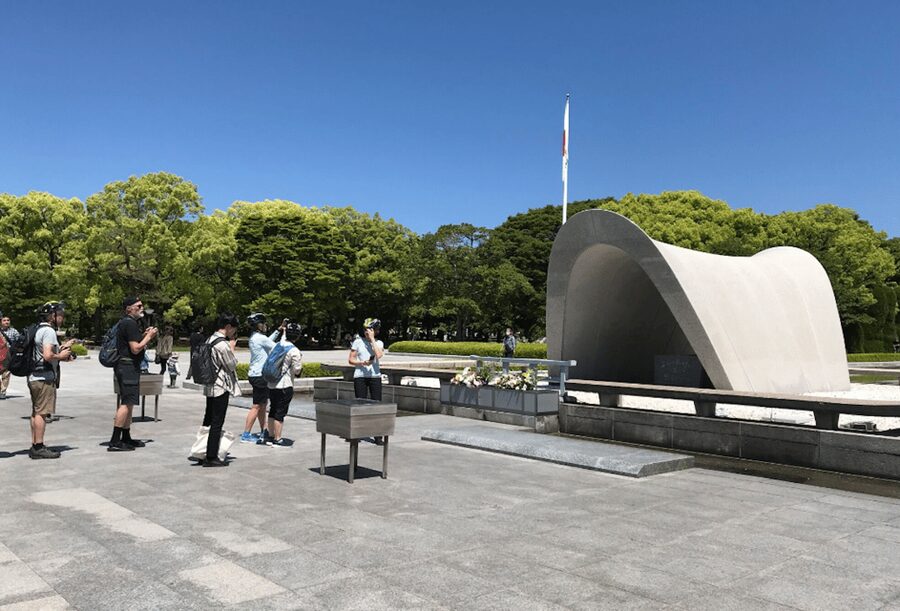
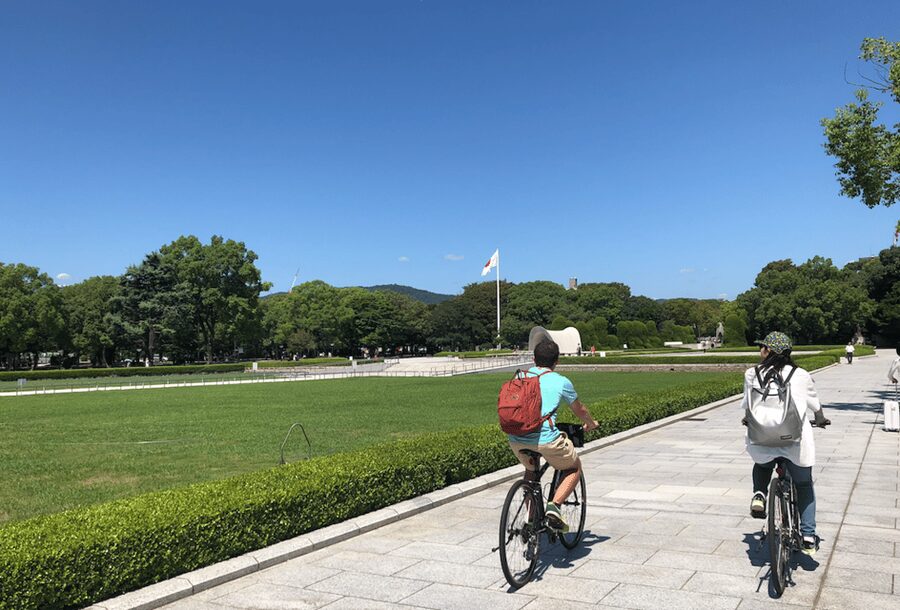
The opening ride follows the riverside toward the Peace Memorial Park. This is a pleasant way to begin because you ease into the cycling before reaching the tour’s most serious section. The route also helps you see how Hiroshima’s waterways shape the modern city.
The Peace Memorial Park is not just a collection of monuments. It is a place of mourning, remembrance, and public reflection connected to the atomic bombing of August 6, 1945. Your guide explains what happened and how Hiroshima became known as the City of Peace. The best guides do not rush this part. They leave room for silence, questions, and your own response.
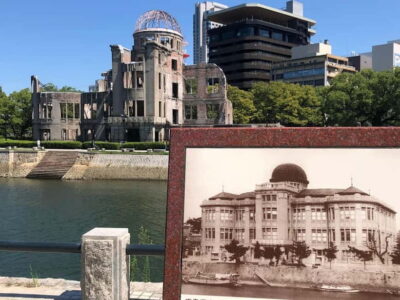
The Atomic Bomb Dome is the central landmark. Its damaged structure became a UNESCO World Heritage Site and remains one of the clearest physical reminders of the bombing. Seeing it from a bike tour has one useful benefit: you approach it as part of a wider area rather than treating it as an isolated photo stop.
You also learn about other memorials in the park. The exact balance of stops can vary with the group and guide, but the tour is designed to cover several important monuments. Reviews particularly praise explanations about the bombing, the loss of life, the city’s recovery, and the story of Sadako and the paper cranes.
This is where the guide’s skill matters most. You are not simply receiving dates and names. Guides such as Miyu have added family stories, while Aimee and Melissa have brought personal connections and local perspectives into the discussion. That can make the past feel more immediate, but the tone remains respectful rather than theatrical.
Allow yourself to be quiet here. You may want more time inside the Peace Memorial Museum, but museum entry is not listed as part of this bike tour. If the museum is a priority, plan a separate visit before or after the ride.
Gokoku Jinja and the route toward Hiroshima Castle
After the Peace Memorial Park, the route continues north to Gokoku Jinja. This is described as Hiroshima’s most popular Shinto shrine, and it provides a change of mood after the memorial park.
At a Shinto shrine, the visual language changes: gates, worship spaces, and a strong sense of ceremony replace the stark memorials of the Peace Park. Your guide can help explain the site and its place in the city. This stop is useful because it keeps Hiroshima from being reduced to one terrible event. You see a living religious tradition and a place still connected to everyday city life.
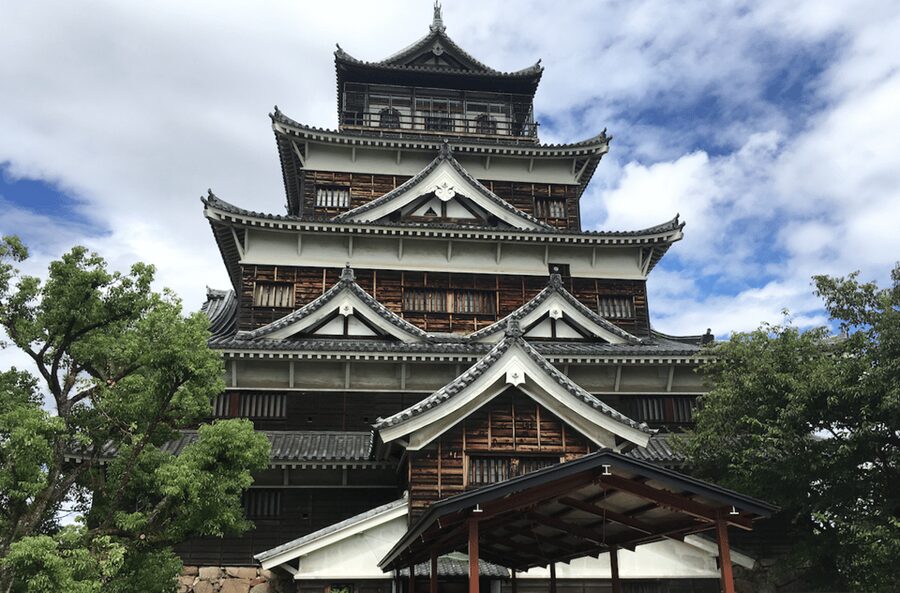
The ride then passes through the grounds of Hiroshima Castle. The castle offers a window into the city’s samurai-era past, before the tour returns to the modern history of the twentieth century. The contrast is valuable. Hiroshima has a long story, and the castle helps place the 1945 bombing within a much larger timeline.
Do not expect a long, detailed castle tour. The main focus remains on seeing several key areas by bike. If you want to spend substantial time inside the castle, you may need to return independently. The tour’s strength is its range, not extended visits at every stop.
Cycling through the castle grounds also gives you a break from the most emotionally demanding part of the tour. You keep moving, but the subject matter broadens. This rhythm, memorials followed by shrine and castle, helps the three and a half hours feel varied rather than heavy from beginning to end.
A few more days on two wheels around Japan worth a look
- Hidden Kyoto E-Biking tour
★ 5.0 · 1,843 reviews - Bike Tour Exploring North Kyoto plus Lunch
★ 5.0 · 1,087 reviews - Tokyo Great Cycling Tour
★ 5.0 · 811 reviews - Arashiyama Bamboo Forest & Hidden Gems Bike Tour (Early Bird)
★ 5.0 · 613 reviews
Shukkei-en Garden makes a calm final stop
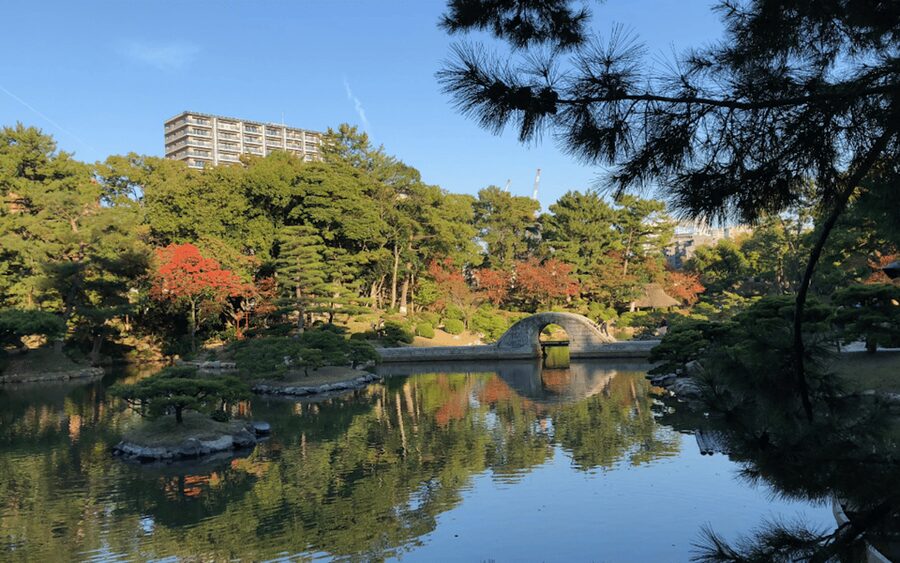
The last major stop is Shukkei-en Garden, built during the Edo Period and regarded as one of the finest traditional gardens in western Japan. Entry is included, which adds useful value to the $70 price.
The garden is a fitting ending. After the busy memorials and historical explanations, its ponds, paths, and carefully arranged scenery offer a quieter way to finish. You can slow down, take photos, and appreciate an older Japanese art form based on controlled scale, water, plants, and changing views.
This stop also makes the tour feel more complete. You have seen Hiroshima as a place of loss and recovery, but also as a city with religious traditions, political history, and refined culture. One of the most memorable descriptions of the tour called the garden the perfect ending, and I can understand why.
The garden visit is not merely an extra attraction added to fill time. It changes the emotional pace of the day. If you are visiting Hiroshima on a short schedule, this combination of major historical sites and a traditional garden gives you more range than a Peace Park visit alone.
The guides shape the experience
The operator uses a team of English-speaking guides, so you may be led by Awais, Aimee, Miyu, James, Ehsan, Hasan, Ihsan, Melissa, Ali, Sage, Levi, or another member of the team. The repeated praise is not just for information. It is for the way the guides communicate.
Awais has been praised for explaining the bombing, monuments, recovery, and Japanese cycling culture in clear English. Aimee is noted for warmth, humor, frequent stops, and useful local recommendations. Miyu has shared family stories that connect the events of 1945 to Hiroshima today. Ehsan has been praised for presenting more than one point of view and encouraging thoughtful questions.
James has also been singled out for careful explanations and for extending the ride to show extra sights when time allowed. That is not something you should assume will happen on every departure, but it reflects the flexible, personal feel a small group can offer.
The guides also receive credit for practical care. They help fit the bikes, keep the pace comfortable, take photos, and stop for breaks. One guide continued the tour in rainy weather with good humor, while another adjusted the timing during a hot day. These details matter more than a memorized speech when you are spending half a day outside.
The subject is handled respectfully. That is essential at the Peace Memorial Park. A good guide gives you facts and context without turning tragedy into entertainment.
Price, pace, and what you get for $70
At $70 per person, this is not the cheapest way to see Hiroshima. You could visit several sights independently for less, especially if you already have a bicycle or prefer walking. The value comes from combining bike hire, helmet, bottled water, an English-speaking guide, a small group, and entry to Shukkei-en Garden in one outing.
You also save planning time. The route connects several places that would otherwise require careful map work and separate decisions about buses, walking, and bike rental. If you have only one day in Hiroshima, that efficiency is worth considering.
The tour lasts 210 minutes, or three and a half hours. That is long enough to see the main areas without taking over your entire day. You can still visit the Peace Memorial Museum, eat Hiroshima-style food, or explore another part of the city afterward.
The value is best for first-time visitors, short-stay visitors, solo cyclists who want company, and anyone who prefers movement to a long walking tour. It is less appealing if you want to linger for an hour at each monument or spend most of your day inside museums.
Free cancellation is available up to 24 hours before the start time, and you can reserve while paying later. Since the ride requires good weather, that flexibility is useful. If rain or poor conditions cancel the tour, you are offered another date or a full refund.
Who should book, and who should skip it
I would choose this tour if you want a broad first look at central Hiroshima and feel comfortable riding a bike for several hours. The route is flat, the pace is generally easy, and the small group format gives you a better chance to ask questions than a large coach tour.
It is particularly good for couples, solo visitors, and families with older teenagers who meet the age requirement. The combination of serious history, local stories, traditional architecture, and garden scenery gives you a useful foundation for the rest of your Hiroshima visit.
Think twice if you have back or heart problems, a pre-existing medical condition, are pregnant, or are under 140 centimeters tall. The activity is also not suitable for children under 12. A bike tour may sound easy, but you still need enough balance, stamina, and comfort on a bicycle to enjoy it.
Hot weather, rain, or a chilly day can affect the experience. The guides do stop regularly, but you remain outdoors for most of the tour. Wear comfortable clothes and shoes, bring weather-appropriate layers, and consider the e-bike option if you want the least physical effort.
Should you book this Hiroshima bike tour?
Yes, if you want to see Hiroshima’s major central sights in one well-paced outing and prefer a personal guide to a self-guided route. The strongest reasons are the flat cycling course, the thoughtful Peace Park explanations, the range of stops, and the consistently praised guide service.
I would not book it as a replacement for every Hiroshima experience. Plan extra time for the Peace Memorial Museum and any castle interiors or other sights you want to explore slowly. But as a first-day orientation, the tour is excellent value. You get the city’s most important places, a moving account of its past, and a calmer view of its present, all without making your feet do the work.
FAQ
How long is the Hiroshima guided bike tour?
The tour lasts 210 minutes, or three and a half hours.
What sights are included on the route?
The route includes the Peace Memorial Park, Atomic Bomb Dome, Gokoku Jinja, Hiroshima Castle, and Shukkei-en Garden.
Is the cycling route difficult?
The route is described as completely flat and suitable for anyone who can ride a bike. The tour includes regular stops, and e-bikes are available.
What is included in the price?
The price includes an English-speaking guide, a high-quality bike, helmet rental, bottled water, and entry to Shukkei-en Garden.
How many people can join the tour?
The group is limited to a maximum of eight participants.
What happens if the weather is poor?
The tour requires good weather. If it is canceled because of poor conditions, you can choose another date or receive a full refund.
Just added around Japan
- Private E-MTB guided cycling around Mt. Aso volcano & grasslands★ 5.0 · 16 reviews
- Handmade Goshuin Book Experience Eco Friendly Upcycling in Tokyo★ 5.0 · 21 reviews
- Tokyo: West-Side Cycling and Food Tour with Guide★ 5.0 · 37 reviews
- Tokyo: Rice Ball Making Class★ 5.0 · 14 reviews
- Tokyo: Discover Traditional Tokyo Full-Day Bicycle Tour★ 4.7 · 131 reviews
- Tokyo: 3h Private E-bike Tours, Starting at Your Hotel★ 5.0 · 36 reviews
- Tokyo Bike Tour: Shibuya, Harajuku & Hidden Gems★ 5.0 · 20 reviews
- Tokyo: Private Cycling Tour with cute E-bike★ 5.0 · 11 reviews
Hiroshima Cycling Tours, compared.
Hiroshima in a Nutshell: Morning Bike Adventure
Read our review →
Hiroshima 2hr Peace Cycling Tour with Local Guide
Read our review →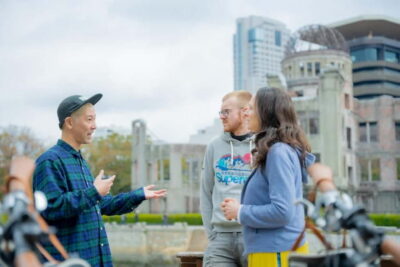
Browse the lists this tour appears in