
REVIEW · JAPAN
Naha: Guided E-Bike Tour of the 12 Zodiac Temples
Shuri’s best corners are easy to miss. This three-hour electric-bike tour takes you through quiet lanes, small temples, sacred springs, and historic sites that are awkward to connect on foot or by car. I especially like the small groups of up to five and the way the e-bikes make Shuri’s hills manageable.
I also like the helmet intercom system, which lets you hear your guide while riding, and the chance to see places such as Ankokuji Temple and Saki Kasahigawa spring. The main consideration is simple: you need to be comfortable riding a bicycle in traffic and on hills. This is not a sightseeing tour for non-riders.
Guides including Maki, Maria, Hiro, Reiji, Jojo, and Tiny have earned warm praise for their clear explanations, care with safety, and friendly manner. At $95 per person, the price is reasonable if you value local interpretation and easy transport between scattered sites, but less attractive if you only want to photograph Shureimon Gate.
Key points to know before booking
- Electric assistance matters: Shuri has hills, and the e-bikes make the climbs far easier than a standard bicycle.
- You visit more than famous landmarks: The route includes tucked-away temples, a miracle spring, old gates, and traditional homes.
- The helmet intercom is useful: You can hear explanations while riding instead of stopping every few minutes.
- The group is genuinely small: With no more than five participants, the guide can check your riding and adjust the pace.
- Guides add much of the value: Maki, Maria, Hiro, Reiji, Jojo, and Tiny are praised for history, cultural context, and personal attention.
- Dress for riding: Wear closed, comfortable shoes and bring water, sunscreen, and a hat.
Why an electric bike works so well in Shuri
Shuri is not a flat sightseeing district. The former royal area rises and falls, and its temples and shrines are spread through side streets rather than arranged along one easy walking route. An electric bike gives you the range to connect them without turning the day into a workout.
You still pedal, so this feels more active than riding in a car. The motor takes the sting out of the hills, which is especially helpful in Okinawa’s heat. Several people praised the bike quality and said the slopes were easy to handle with electric assistance.
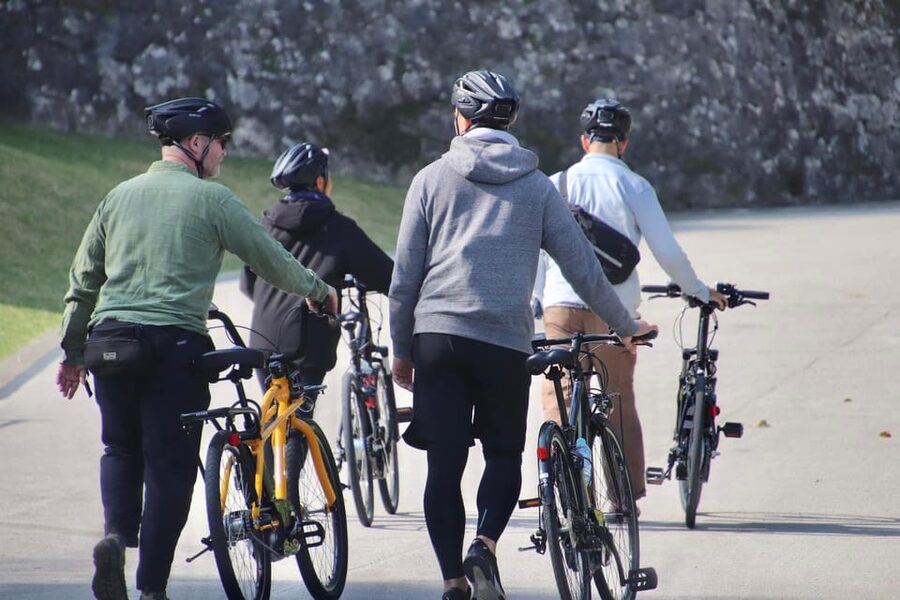
You meet at the shop in Daishobiru, about a five-minute walk from Monorail Makishi Station and next to the post office. Staff fit you with the bike and helmet before you set off. The helmet has an intercom system, so your guide can give directions and explain what you are seeing while the group is moving.
That small detail makes a real difference. On an ordinary bike tour, you may lose the guide’s voice to traffic, wind, or distance. Here, you can keep riding and still hear the story.
The tour is limited to five people. That helps with road safety and allows the guide to check your comfort, hydration, and bike handling. Guides such as Hiro and Maria were praised for stopping to make sure everyone was doing well, while Maki was noted for adapting the experience to the people in her group.
More E-Bike Tours in Japan
- Hidden Kyoto E-Biking tour
★ 5.0 · 1,843 reviews - Tokyo Top Highlights 3h Guided E-bike Tour
★ 5.0 · 714 reviews - 3h Tokyo E-Bike Tour: Hidden Gems, and Local Life with guide
★ 5.0 · 670 reviews
Shuri Kannon Temple and the first taste of old Okinawa
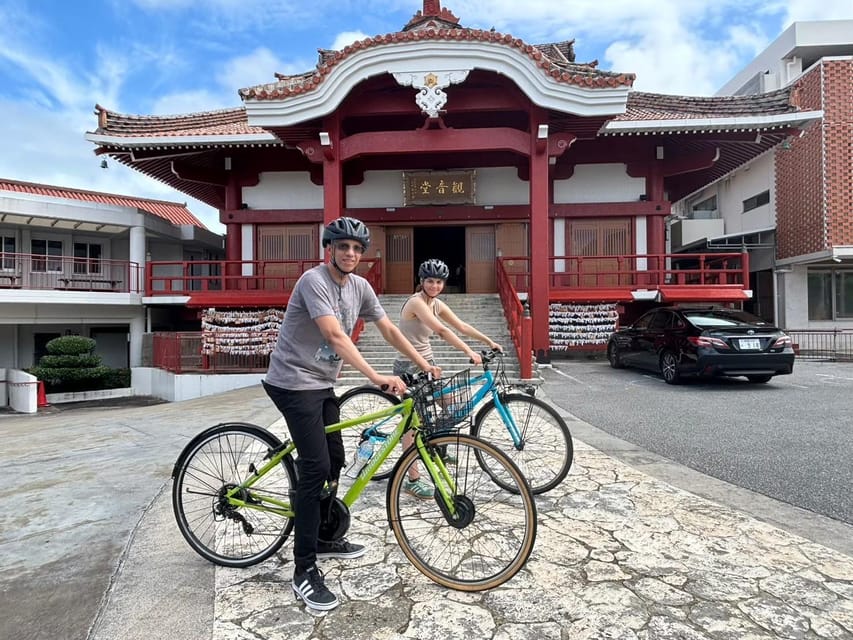
The first major stop is Shuri Kannon Temple, a guardian temple dating to the Ryukyu Kingdom period. Its bright red coloring and decorated carvings give you an immediate sense that Okinawan religious architecture has its own look and character.
From the temple, you can enjoy views across Shuri. This is a good early stop because it gives you a visual introduction to the district before you continue into narrower streets and less obvious sites.
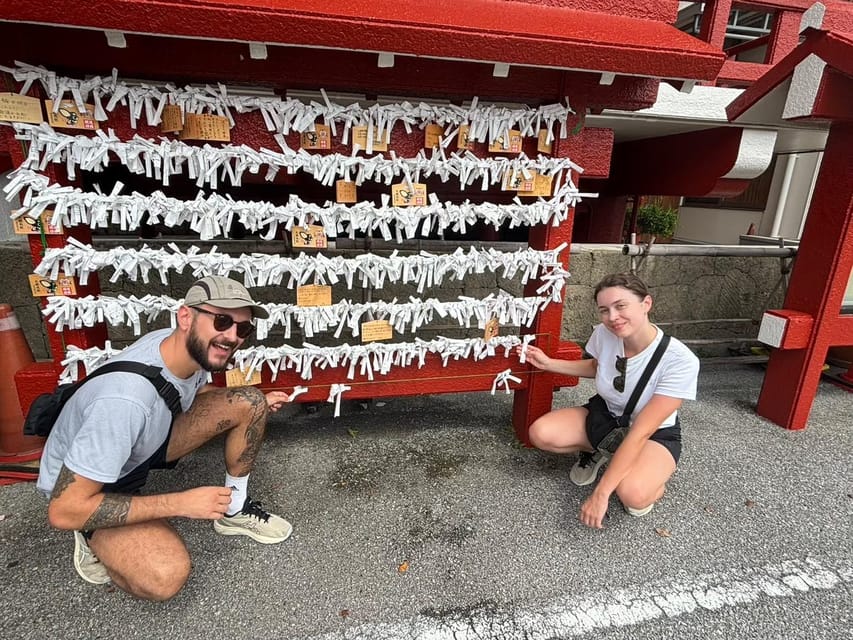
Your guide explains the customs connected with temples and shrines, including the difference between simply looking at a religious site and behaving respectfully within it. Offerings are not included, so bring your own money if you want to make one. That is optional, not an extra charge hidden in the tour.
The pace here is not just pedal, photograph, leave. You have time to inspect the carvings and decorations, ask questions, and understand why the temple matters. If you are interested in Okinawan spiritual traditions, this is one of the most rewarding parts of the ride.
Ankokuji Temple, old homes, and a very large gajumaru
Ankokuji Temple is a short visit, listed at about five minutes, but it adds a different mood. The setting includes traditional houses, an old gate, and a large gajumaru tree. The tree is the kind of natural feature that can make a small stop memorable, especially when your guide explains its place in Okinawan life.
This is also where the tour shows its practical strength. A visitor following only major road signs could easily pass by. By bike, you can reach these quieter corners without arranging several separate taxi rides.
Do not expect every stop to be a grand monument. Some are compact, peaceful, and best appreciated through details such as a gate, tree, statue, or local custom. If you prefer large museums and long formal tours, the short stops may feel brief. I see that as part of the charm, but it is worth knowing before you book.
Shureimon Gate, the classic photo stop
Shureimon Gate is the tour’s most recognizable landmark. Its red structure is one of Okinawa’s best-known symbols, and you get time to take a photograph with your bicycle in front of it.
The bike makes the picture more personal than a standard landmark snapshot. It also captures the basic idea of the tour: you are not being carried from attraction to attraction. You are moving through Shuri under your own power, with electric help and a local guide.
This stop can be busier and more familiar than the small temples. That contrast works well. You get the famous image, then return to less obvious sites where the guide can explain local customs and history without the visit feeling like a checklist.
More Heritage and Temple Bike Tours in Japan
- E-Bike Nara Highlights – Todaiji, Knives, Deer, Shrine
★ 4.8 · 186 reviews - Historical Kyoto E-Bike Tour
★ 5.0 · 181 reviews - 4.5-Hour Kyoto Bike Tour with Lunch and UNESCO Zen Temples
★ 5.0 · 122 reviews - Kyoto: Fushimi Inari Shrine and Tofukuji Temple E-Bike Tour
★ 5.0 · 75 reviews
Daruma Temple and the meaning behind the red figures
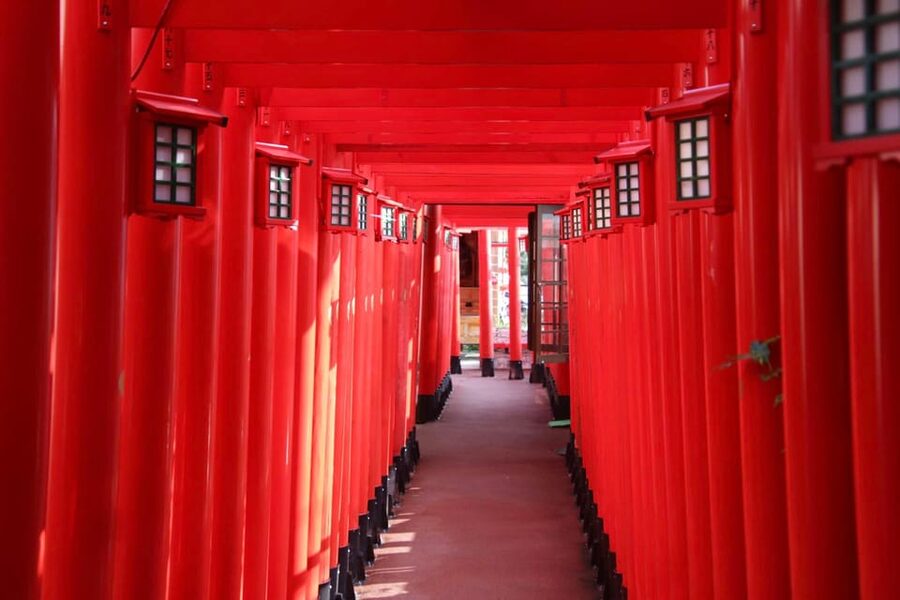
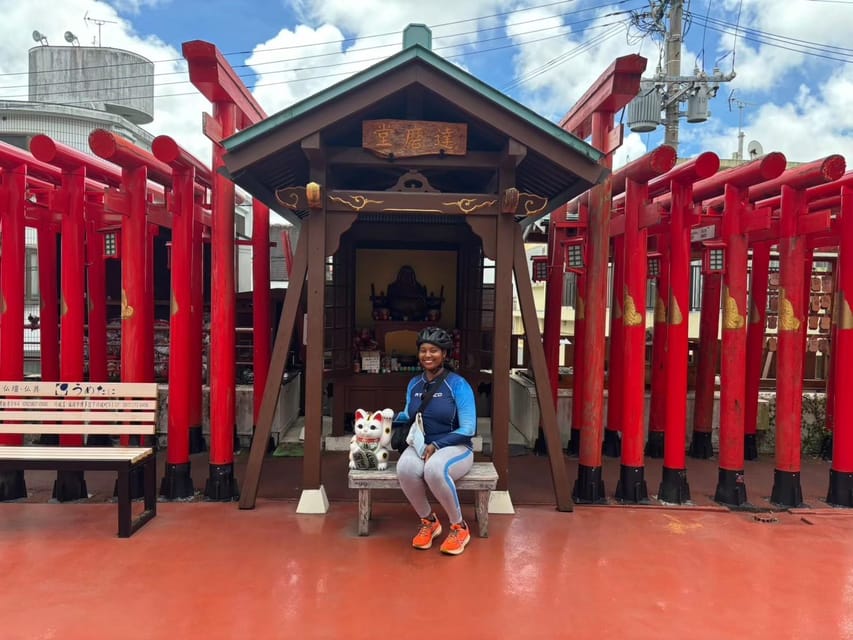
Daruma Temple is associated with prayers for health and pregnancy. Its red daruma dolls and torii gate give it a strong visual identity, but the real value is the explanation of what people come here to pray for and how the site fits into local religious practice.
The visit lasts about 20 minutes, long enough to look closely and ask questions without becoming a lengthy temple lecture. I would pay attention to your guide’s explanation here, since the dolls are more than colorful decoration.
The bright red setting also adds variety after the quieter, older-looking sites. For photographers, it is one of the more striking stops. For anyone interested in Japanese religious customs, it gives useful context that you might miss by viewing the temple on your own.
Seikoji Temple and a quieter spiritual pause
Seikoji Temple has a calmer feel. You see Jizo statues and a modern building, an interesting contrast to older gates, traditional homes, and red-painted structures elsewhere on the route.
The stop is listed at around 10 minutes. That is enough for a short visit, though anyone who likes to linger at religious sites may wish for more time. The schedule works because the tour covers several places in three hours, but it does mean you should listen closely and use each stop well.
The Jizo statues are worth a careful look. Your guide can explain their role and help you notice details that would otherwise seem like part of the background. This is one of the places where the intercom and small group format help, since you can ask a question without holding up a large crowd.
Saki Kasahigawa spring and Sogenji Temple
The route also includes Saki Kasahigawa, described as a miracle spring flowing from deep forest. The spring offers a change from temple buildings and gates. Instead of focusing on painted wood or carved decoration, you pause beside flowing water and consider the long connection between natural places and spiritual belief.
The description of the route also includes Sogenji Temple, a former royal mausoleum. Its park, gate, and gajumaru tree provide another quiet setting before you return to the bike shop.
These final sites help explain why a bicycle is useful here. Shuri’s religious places are not all gathered in one compact compound. You move between them through ordinary streets, side roads, and green spaces, seeing how sacred sites sit within the modern district.
Because the route information lists both Seikoji and the later Sogenji visit, confirm the exact stop sequence when you book. Weather or local conditions can change the plan, and the operator says it may adjust the route if the precipitation chance exceeds 70 percent or severe weather is expected. You should receive notice the day before in that situation.
What the guide adds to the experience
The guide is the main reason to choose this tour instead of renting an e-bike alone. Several guides have been praised for explaining Okinawan history and spiritual customs in clear English, while the tour is also offered in Chinese and Japanese.
Maki is repeatedly singled out for warmth, strong explanations, safe riding guidance, and tailoring the route to the group. Maria is praised for her English, professionalism, and personal suggestions at the end of the tour. Hiro is noted for checking hydration and making sure riders were comfortable.
Reiji has been appreciated for detailed explanations at each stop. Jojo was praised for his energy and for making good use of the helmet microphone. Tiny was noted for telling stories about the area in understandable English.
Those individual names matter because a three-hour cultural tour can feel very different depending on the guide. The strongest part of this experience is not only reaching the temples. It is having someone connect the buildings, trees, water, customs, and royal history into a readable story.
The guides also help with cycling. You receive directions for dealing with traffic, and the small group makes it easier to maintain a comfortable pace. Still, you should not treat this as a traffic-free ride. You need to control a bicycle confidently and follow instructions.
The $95 price and who gets good value

At $95 per person, this is not the cheapest way to see Shuri. You could visit a few major sights independently for less, especially if you walk or use public transport.
The value comes from the package: a quality electric bike, helmet with intercom, guide, route planning, and access to small sites that are easy to miss. You also save the effort of piecing together several temples spread across the district. For a first visit to Naha, that combination makes the price fair.
The price is strongest for couples, friends, and solo visitors who want both activity and cultural explanation. It also works well if you have only one half-day available and want more than the main gate and palace area.
It is weaker value if you dislike cycling, want long visits at every temple, or mainly want a transport service. Meals, drinks, and temple offerings are not included, so bring water and a little cash. The tour does not provide a meal stop as part of the standard plan, although one guide added a bakery stop when time allowed.
Practical details for a comfortable ride
Wear comfortable closed shoes. Sandals and flip flops are not allowed, and they are poor choices for controlling a bicycle on slopes anyway.
Bring water, sunscreen, and a hat. Okinawa’s sun can make a three-hour ride feel harder than the mileage suggests. Comfortable clothing suitable for cycling will help more than anything stylish but restrictive.
The tour starts and ends at the same shop, which simplifies your plans. It is close to Makishi Station, so you can reach the meeting point by monorail and avoid arranging a separate taxi.
Free cancellation is available up to 24 hours before the tour for a full refund. You can also reserve and pay later, which is useful if your Naha schedule depends on cruise timing, weather, or another booking.
Smoking is not allowed during the tour. People who cannot ride a bike are not suitable for this experience, and there is no indication that a non-cycling option is offered.
Who should book this Naha bike tour?
I would choose this tour if you want to combine light exercise with Okinawan culture. It is especially good for people who like small religious sites, local stories, and quiet streets more than a string of major attractions.
You should also consider it if Shuri’s hills worry you. The electric motor removes much of the strain, while the guide handles route finding and gives riding instructions. The bike does not remove the need to pedal or pay attention, but it makes the district much more approachable.
Families and mixed-ability groups should judge their own cycling skills carefully. The guides can accommodate different riding levels, but everyone must be able to ride independently and handle the road.
I would skip it if you cannot ride a bicycle, dislike warm-weather activity, or want a slow temple visit with no time pressure. Three hours is enough to see a lot, but the schedule involves several short stops and regular riding.
Should you book the 12 Zodiac Temples e-bike tour?
Book it if you want to see the Shuri area beyond its famous gate and prefer local explanation over independent wandering. The small group, electric bikes, and helmet intercom solve the three biggest problems with this kind of outing: hills, navigation, and hearing the guide.
At $95, the tour earns its price through access to scattered temples, safety support, and guides who add real cultural context. Bring water, wear proper shoes, and accept that the ride is part of the experience, not just transportation. If you can handle a bicycle, this is a lively and efficient way to meet a quieter side of Naha.
FAQ
Where does the tour start and finish?
It starts and ends at the bike shop in Daishobiru. The shop is about a five-minute walk from Monorail Makishi Station, next to the post office.
How long does the tour last?
The tour lasts three hours.
What languages are available?
The tour is available in English, Chinese, and Japanese.
How many people are in the group?
The tour is limited to five participants.
Is the electric bike rental included?
Yes. The electric bicycle, helmet, and guided tour with an intercom system are included.
What should I bring?
Bring comfortable shoes, water, sunscreen, and a hat. Wear clothing suitable for cycling.
Can I join if I cannot ride a bicycle?
No. The tour is not suitable for people who cannot ride a bike. Sandals and flip flops are also not allowed.
Just added around Japan
- Private E-MTB guided cycling around Mt. Aso volcano & grasslands★ 5.0 · 16 reviews
- Handmade Goshuin Book Experience Eco Friendly Upcycling in Tokyo★ 5.0 · 21 reviews
- Tokyo: West-Side Cycling and Food Tour with Guide★ 5.0 · 37 reviews
- Tokyo: Discover Traditional Tokyo Full-Day Bicycle Tour★ 4.7 · 131 reviews
- Tokyo: Rice Ball Making Class★ 5.0 · 14 reviews
- Tokyo: 3h Private E-bike Tours, Starting at Your Hotel★ 5.0 · 36 reviews
- Tokyo Bike Tour: Shibuya, Harajuku & Hidden Gems★ 5.0 · 20 reviews
- Tokyo: Private Cycling Tour with cute E-bike★ 5.0 · 11 reviews
Heritage and Temple Bike Tours, compared.

Historical Singapore Bike Tour on Full-Sized Bicycles
Read our review →

Night Bike Tour with Temples & Flower Market Visit
Read our review →
Intramuros, Manila: Historical Bamboo Bike Tour
Read our review →
Historical Bike Tour of Savannah and Keep Bikes After Tour
Read our review →Browse the lists this tour appears in