
REVIEW · JAPAN
E-Bike Nara Highlights – Todaiji, Knives, Deer, Shrine
Nara rewards a little extra energy. This 3.5-hour e-bike tour packs Todaiji, Kasuga Taisha, and Nara Park into one lively outing, while also adding a traditional knife shop and time with the famous deer.
I especially like the way the electric bikes reduce the walking burden and the way the route mixes major sights with a more local stop at Kikuichimonjushirokanenaga. The guides, including Chris, Remi, Robert, Melody, and others, are repeatedly praised for their warmth, patience, local insight, and help with photos. The main drawback is price: at $90 per person, it costs more than a basic walking visit, and one report found a bike poorly suited to a taller rider.
What makes this Nara bike tour worth considering

- You cover a large part of Nara Park in 210 minutes, including temples, shrines, woodland roads, viewpoints, and the pond at Ukimido.
- Todaiji admission is included, so you can enter one of Japan’s most important temples without arranging a separate ticket.
- The deer feeding lesson is practical, showing you how to offer the rice crackers safely and politely.
- The knife stop adds something different, with an introduction to Japanese cutlery and help choosing a practical souvenir.
- Electric assistance helps on hills and in hot weather, though the riding pace may suit confident cyclists better than complete beginners.
- The meeting point is convenient, less than five minutes on foot from Kintetsu Nara Station, not JR Nara Station.
Why an e-bike works so well in Nara Park
Nara’s best sights are spread across a large park area. You can walk between them, but the distances add up quickly, especially in summer, during cherry blossom season, or after several days of temple visits elsewhere in Japan.
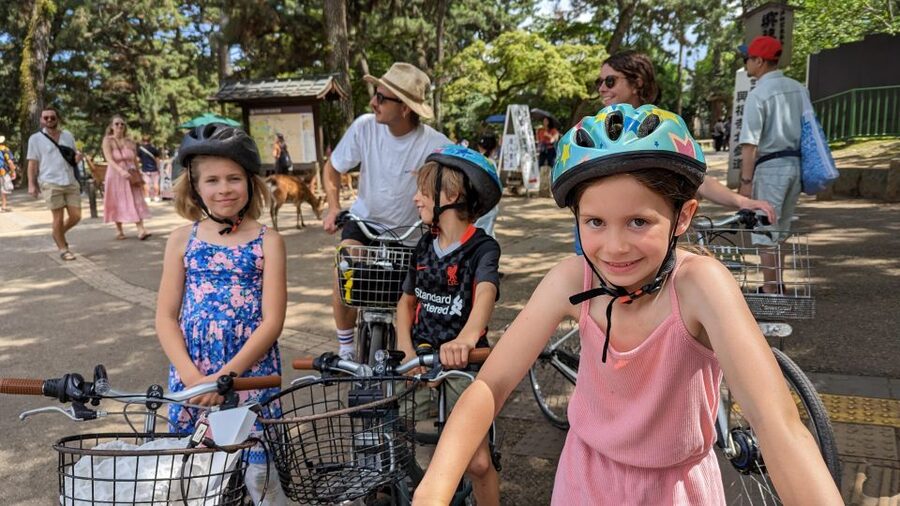
The e-bike changes the rhythm. You ride between stops, park near the main sites, walk when you need to, and then get back on rather than retracing the same footpaths. One family of five found the bikes especially useful for keeping younger riders interested, while a visitor in his 60s said the electric assistance made the route manageable despite being out of shape.
That does not mean this is a slow cycling tour. A useful warning comes from a rainy-day outing that ran at a forward pace. The bikes were in good condition, but the rider noted that anyone expecting a gentle, leisurely cruise might find the movement brisk. You should be comfortable controlling a bicycle before booking. Bicycle insurance is not included.
The route also includes some hills around Mt. Wakakusa and Kasuga Taisha. That is where the electric motor earns its keep. You still need to pedal and steer, but the uphill work is far less demanding than on a standard bicycle.
More City Highlights Bike Tours in Japan
- Tokyo Top Highlights 3h Guided E-bike Tour
★ 5.0 · 714 reviews - 5 Top Highlights of Kyoto Full Day Bike Tour (E-bike option)
★ 5.0 · 511 reviews - Tokyo: 3-Hour Bike or E-Bike City Highlights Tour
★ 4.8 · 435 reviews
Starting near Kintetsu Nara Station
The tour begins at 16-1 Takamaichicho, a short walk from Kintetsu Nara Station. This is a better starting point than it might seem. Kintetsu Station is close to Nara Park and the main sightseeing zone, while JR Nara Station is farther away.
Arrive 15 minutes early. Look for the guide in a navy cap and red polo shirt with the JTA uniform. The base is in front of the Life 21 building, less than five minutes from the station.
The guide sets up the e-bikes and gives the basic instructions before the group heads toward Nara Park. Helmets are available if requested, subject to availability. Bring comfortable clothes, comfortable shoes, your passport, and cash. Extra deer crackers, snacks, and drinks cost extra.
Private and small-group options are available. A shared tour can become a small private-feeling experience if only a few people book, but there is a two-person minimum for the session to operate. A solo booking may be cancelled if no second participant joins, with rescheduling or a full refund offered.
Nara Park and the proper way to feed deer
The first major part of the ride takes you into Nara Park, where deer move freely around the paths and temple grounds. The animals are an important part of the Nara experience, but they are not tame pets. A guide is useful here because you learn how to handle the deer crackers, known as shika senbei, in a way that keeps the exchange orderly.
The included deer cookies are a nice touch. You do not have to search for a vendor before the activity begins, and the guide can explain the local custom. Extra cookies are not included, so pace your feeding if you want the experience to last.
You will likely have time for photos and wildlife viewing as you ride through the park. The bikes let you see more of the open area without turning the entire day into a long march. Still, expect to get off and walk at the temple and shrine stops. This is not a pedal-through sightseeing ride.
Nandaimon Gate: an impressive first stop
The massive Nandaimon Gate leads toward Todaiji and makes an excellent photo stop. Its scale gives you an immediate sense that Nara’s major religious sites were built to impress, even before you reach the main temple hall.
The guide provides context here and allows time for photos, walking, and deer watching. This is one of the places where a guide can make a difference. It is easy to take a quick picture of the gate and move on, but the size, guardians, and position at the temple entrance deserve a few minutes of attention.
Because deer also gather around the approach, keep your food and paper items under control. The animals are part of the scene, but they can be persistent when they think crackers are available.
More E-Bike Tours in Japan
- Hidden Kyoto E-Biking tour
★ 5.0 · 1,843 reviews - 3h Tokyo E-Bike Tour: Hidden Gems, and Local Life with guide
★ 5.0 · 670 reviews - Kyoto: Memory Kyoto E-Bike Tour
★ 4.8 · 297 reviews - E-Bike Tours of the highlights of Kyoto!!!
★ 5.0 · 291 reviews
Todaiji Temple and the Great Buddha

Todaiji is the centerpiece of the tour. Entrance is included, which matters because this is the most substantial admission stop on the route. You get free time inside and can explore at your own pace, with the guide offering background before or around the visit.
The temple is famous for its enormous bronze Buddha and its huge wooden hall. The building alone is a reason to visit, but the experience is stronger when you understand that this is a working Buddhist temple rather than only a historic photo stop.
The scheduled 45 minutes gives you enough time for the main hall, photos, and a look around the grounds, though you should not expect to inspect every corner in detail. If you like lingering at temples, you may want to return later on your own.
This stop is partly guided and partly self-directed. That balance works well. You receive an explanation of what you are seeing, then have room to look around without being kept in a tight group.
Mt. Wakakusa and the ride through the park
After Todaiji, the route passes Mt. Wakakusa. The stop is listed as a short photo and scenic break rather than a climb, so you should not expect a mountain hike.
The hill gives the route some visual variety and helps you appreciate the scale of Nara Park. You also get another chance to see deer away from the busiest temple entrance. The electric bikes are helpful on this part of the route, especially in warm weather.
The pace may be more active than a walking tour. That is good if you want to cover ground, but less appealing if you prefer to stop every few minutes. Tell your guide if you need adjustments. Guides such as Remi, Robert, Melody, and Chris were repeatedly praised for adapting to different interests and comfort levels.
Japanese knives at Kikuichimonjushirokanenaga
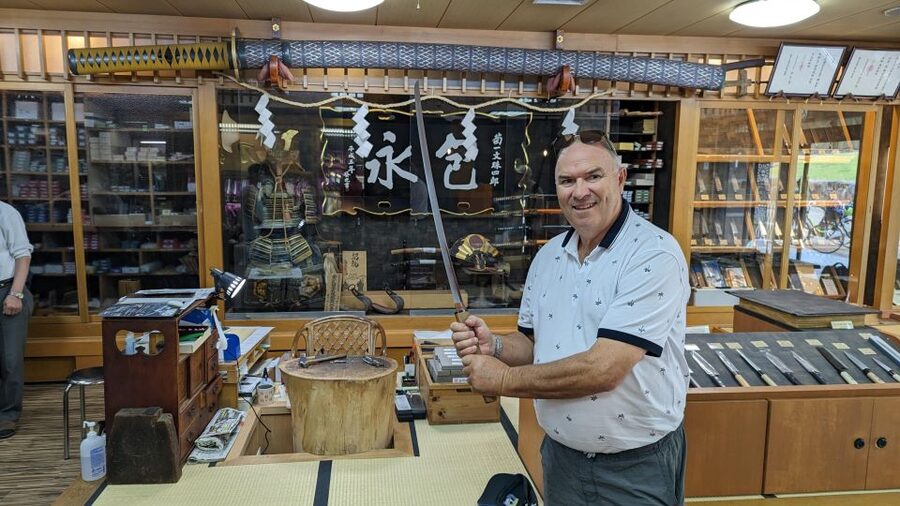
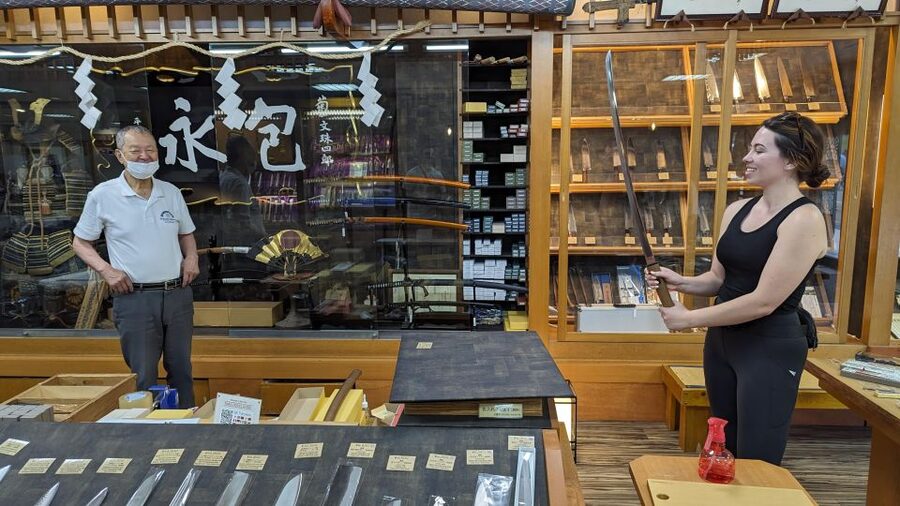
The knife stop is the tour’s most unusual feature. At Kikuichimonjushirokanenaga honten, you get an introduction to Japanese cutlery, its craftsmanship, and its connection to the older sword-making tradition.
You have about 30 minutes for the visit, including a break, photos, local snacks, and shopping. One snack, Kanoko, is included for each person. The guide can also help with choosing a knife or souvenir, which is valuable if you are unsure about blade types, uses, or bringing a purchase home.
This is not simply a forced retail stop. The cutlery connection gives the wider Nara visit another layer, and several people found themselves buying knives after planning not to. That possibility is worth keeping in mind when judging the price. The tour gives you access to an informed shopping experience, but you should set your own budget before entering.
If you want to buy a kitchen knife, ask questions about care, sharpening, storage, and airline transport. The guide can assist with communication and selection, but the purchase itself is not included.
Kasuga Taisha and its lanterns
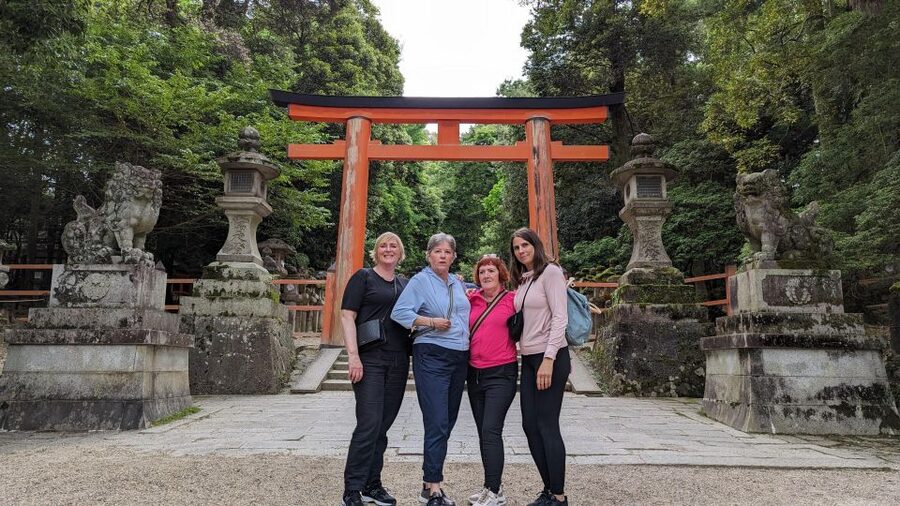
Kasuga Taisha brings a different mood from Todaiji. This Shinto shrine is known for its long approach, stone lanterns, bronze lanterns, and wooded setting. The tour allows about 30 minutes for the shrine visit and walking.
The famous lanterns are a major reason to come, but the setting matters just as much. The route through the shrine grounds feels distinct from the broad open space around Todaiji. Your guide can also help explain the difference between Buddhist and Shinto traditions, a subject that several guides have handled particularly well.
You will have time for photographs and deer viewing here too. The shrine stop is not an exhaustive visit to every building, so if Kasuga Taisha is your main reason for visiting Nara, plan to return independently with more time.
Ukimido and the final ride back
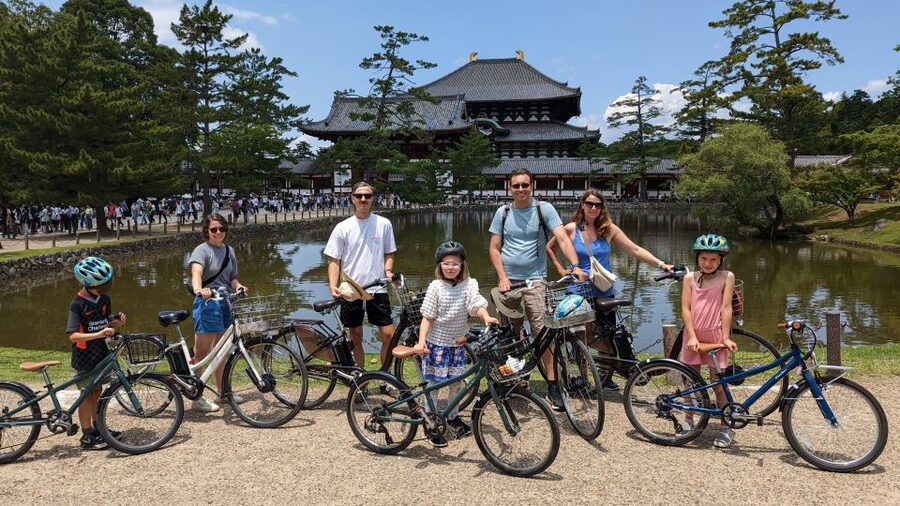
The route finishes with a scenic stop at Ukimido, a pavilion associated with the pond in Nara Park. The planned 15 minutes is enough for photos and a quiet pause before the final ride.
This is a smart ending. After temples, deer, shopping, and shrine grounds, the pond offers a change of pace. You can take in the view, walk briefly, and then cycle back through Nara Park toward the starting point.
The full schedule includes roughly 20 minutes of riding through the park after Kasuga Taisha, followed by the Ukimido stop and another short ride back. The tour returns to 16-1 Takamaichicho.
Guides, language, and group style
The tour offers English and French, but French is not guaranteed on a shared outing. If you need a French-speaking guide, contact the provider ahead of time to check availability for your date.
Guide quality is one of the strongest parts of the experience. Chris has been praised for being friendly, patient, and flexible. Remi is noted for explaining Japanese culture and history in detail, while Robert is frequently credited with combining safety, humor, and strong local knowledge. Melody and Elodie have also been described as helpful, thoughtful, and easy to understand.
That range matters because the guide does more than lead the bikes. The best part of the experience is often the small explanations between stops: how to approach the deer, how Buddhist and Shinto spaces differ, what makes a Japanese knife useful, and where to pause for a good photo.
The experience can be private or shared in a small group. Single riders may book, but remember the two-person minimum for the activity to run.
Is $90 per person good value?
At $90 per person, this is not the cheapest way to see Nara. You could visit Nara Park and some temple grounds on your own for less, especially if you are happy to walk and research the route in advance.
The value comes from combining several costs and services:
- E-bike rental for the full route
- Todaiji entrance fee
- Deer crackers
- A local bilingual guide
- A Japanese snack
- Assistance at the knife shop
- A planned route that saves time and walking
I think the price makes the most sense if you have only one day in Nara, dislike long walks, are visiting in hot weather, or want help with the cultural background. It is also a strong choice for families and older riders who can cycle but would rather avoid covering the full park on foot.
The value is weaker if you already know Nara well, prefer a very slow pace, or mainly want to see Todaiji and leave. One person felt the tour was somewhat expensive compared with similar outings, while another found it worth every penny. Both views are fair.
Who should book this experience?
You should consider this tour if you:
- Have limited time in Nara
- Are comfortable riding a bicycle
- Want to see more than the main deer area
- Prefer guided context to self-guided research
- Like the idea of buying Japanese cutlery
- Want to reduce the amount of walking
- Are visiting with children old enough to ride or use a child seat
For children under 10, child seats can be provided, with up to one seat per e-bike. Ask about the arrangement when booking.
I would hesitate if you are not confident on a bike, want a very relaxed sightseeing pace, or have a strong preference for spending a long time inside one temple. Also note that the tour does not include bicycle insurance, and weather can affect comfort. Rain and chilly conditions did not stop one outing, but good clothing and realistic expectations will help.
FAQ
Where does the Nara e-bike tour start?
It starts at 16-1 Takamaichicho, in front of the Life 21 building, at the bike base. The meeting point is less than a five-minute walk from Kintetsu Nara Station, not JR Nara Station.
How long does the experience last?
The tour lasts 210 minutes, or 3.5 hours. Starting times vary, so check availability for the date you want.
What is included in the price?
The price includes the e-bike rental, Todaiji entrance fee, deer cookies, a bilingual local guide, one Kanoko snack per person, and help with knife or souvenir shopping if needed. Helmets are available on request, depending on availability.
Are French-speaking guides available?
French-speaking guides are available, but French is not guaranteed on a shared tour. Contact the provider in advance if you need the tour conducted in French.
Can children under 10 join?
Yes. Child seats can be provided for young riders, with up to one child seat per e-bike.
Is bicycle insurance included?
No. Bicycle insurance is not included. You should be able to ride a bicycle properly before booking.
Can I cancel the tour?
You can cancel up to 24 hours before the activity for a full refund. Reserve-now, pay-later booking is also available.
Should you book the Nara e-bike tour?
I would book it if I had a short stay in Nara and wanted to see Todaiji, Kasuga Taisha, Mt. Wakakusa, Ukimido, and the deer without spending most of the day walking. The knife stop and included snack also make it feel more distinctive than a standard temple circuit.
The best fit is an active, curious visitor who can ride confidently and appreciates a guide who can explain what is behind the sights. If you want the slowest possible pace or the lowest possible cost, walk Nara Park independently. For most visitors with limited time, the e-bike is a practical way to see more, and the guides add the local detail that makes the route worth $90.
More Heritage and Temple Bike Tours in Japan
- Historical Kyoto E-Bike Tour
★ 5.0 · 181 reviews - 4.5-Hour Kyoto Bike Tour with Lunch and UNESCO Zen Temples
★ 5.0 · 122 reviews - Kyoto: Fushimi Inari Shrine and Tofukuji Temple E-Bike Tour
★ 5.0 · 75 reviews - Kyoto: Hidden Gems E-Bike Tour Through Backstreets & Temples
★ 4.9 · 54 reviews
Just added around Japan
- Private E-MTB guided cycling around Mt. Aso volcano & grasslands★ 5.0 · 16 reviews
- Handmade Goshuin Book Experience Eco Friendly Upcycling in Tokyo★ 5.0 · 21 reviews
- Tokyo: West-Side Cycling and Food Tour with Guide★ 5.0 · 37 reviews
- Tokyo: Discover Traditional Tokyo Full-Day Bicycle Tour★ 4.7 · 131 reviews
- Tokyo: Rice Ball Making Class★ 5.0 · 14 reviews
- Tokyo: 3h Private E-bike Tours, Starting at Your Hotel★ 5.0 · 36 reviews
- Tokyo Bike Tour: Shibuya, Harajuku & Hidden Gems★ 5.0 · 20 reviews
- Tokyo: Private Cycling Tour with cute E-bike★ 5.0 · 11 reviews
Heritage and Temple Bike Tours, compared.
Historical Singapore Bike Tour on Full-Sized Bicycles
Read our review →

Night Bike Tour with Temples & Flower Market Visit
Read our review →
Intramuros, Manila: Historical Bamboo Bike Tour
Read our review →
Historical Bike Tour of Savannah and Keep Bikes After Tour
Read our review →Browse the lists this tour appears in